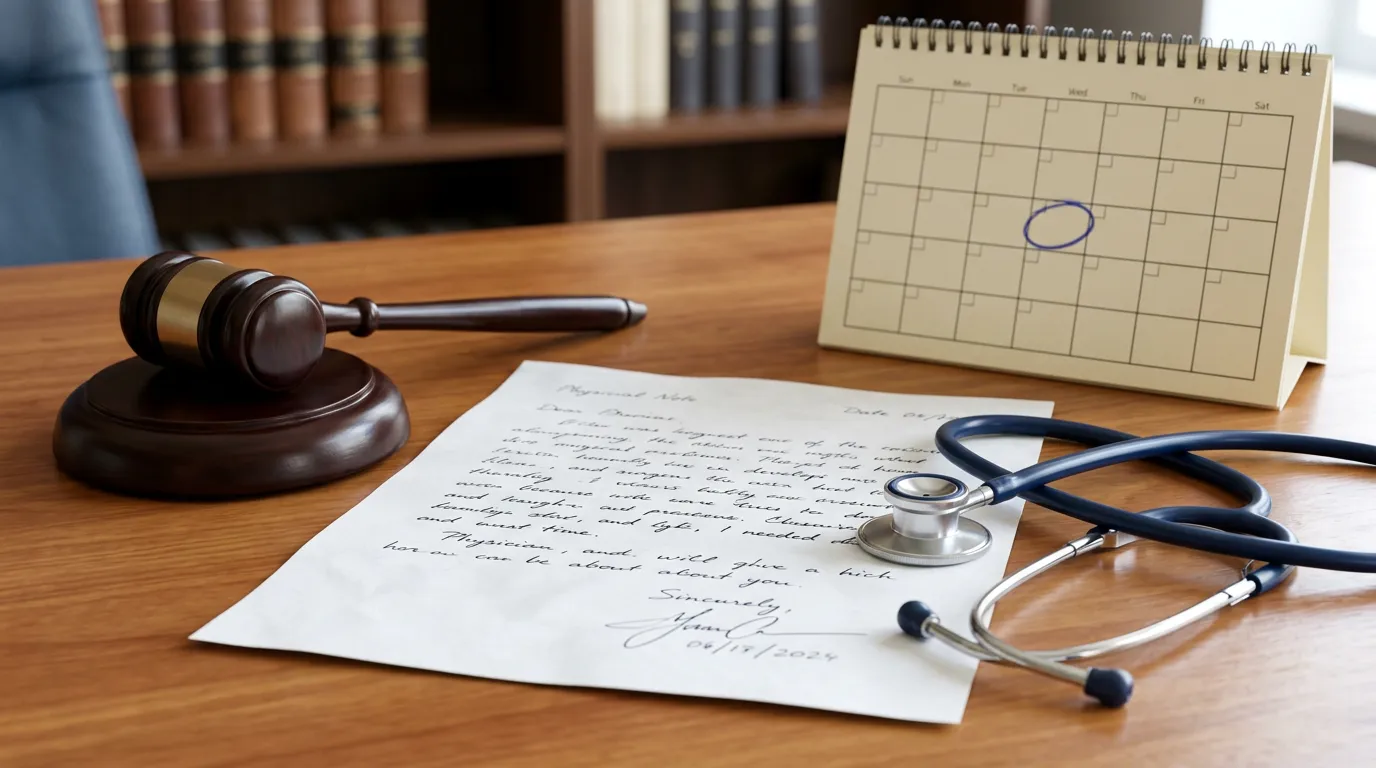


You have a note from a clinician, and your employer pushes back.
Can an employer reject a doctors note? Yes. A note is evidence of a visit plus guidance for your absence, and the employer or school still decides whether it meets its own attendance rules.
This page explains why notes get questioned, what a clear note says, and how to start a visit with a licensed clinician.
Can an Employer Reject a Doctors Note? Main Takeaways
-
Yes. Employers and schools set their own attendance rules, and they can question a note that does not meet them.
-
A note from a licensed clinician after a real visit is easier to verify than a template or a blank form.
-
A clear note shows dates and the work or school guidance the clinician supports. It does not list a diagnosis unless one is needed.
-
No one can promise acceptance, so read your handbook or attendance policy before you submit a note.
-
Many visits happen the same day, but a visit is not instant approval of every request.
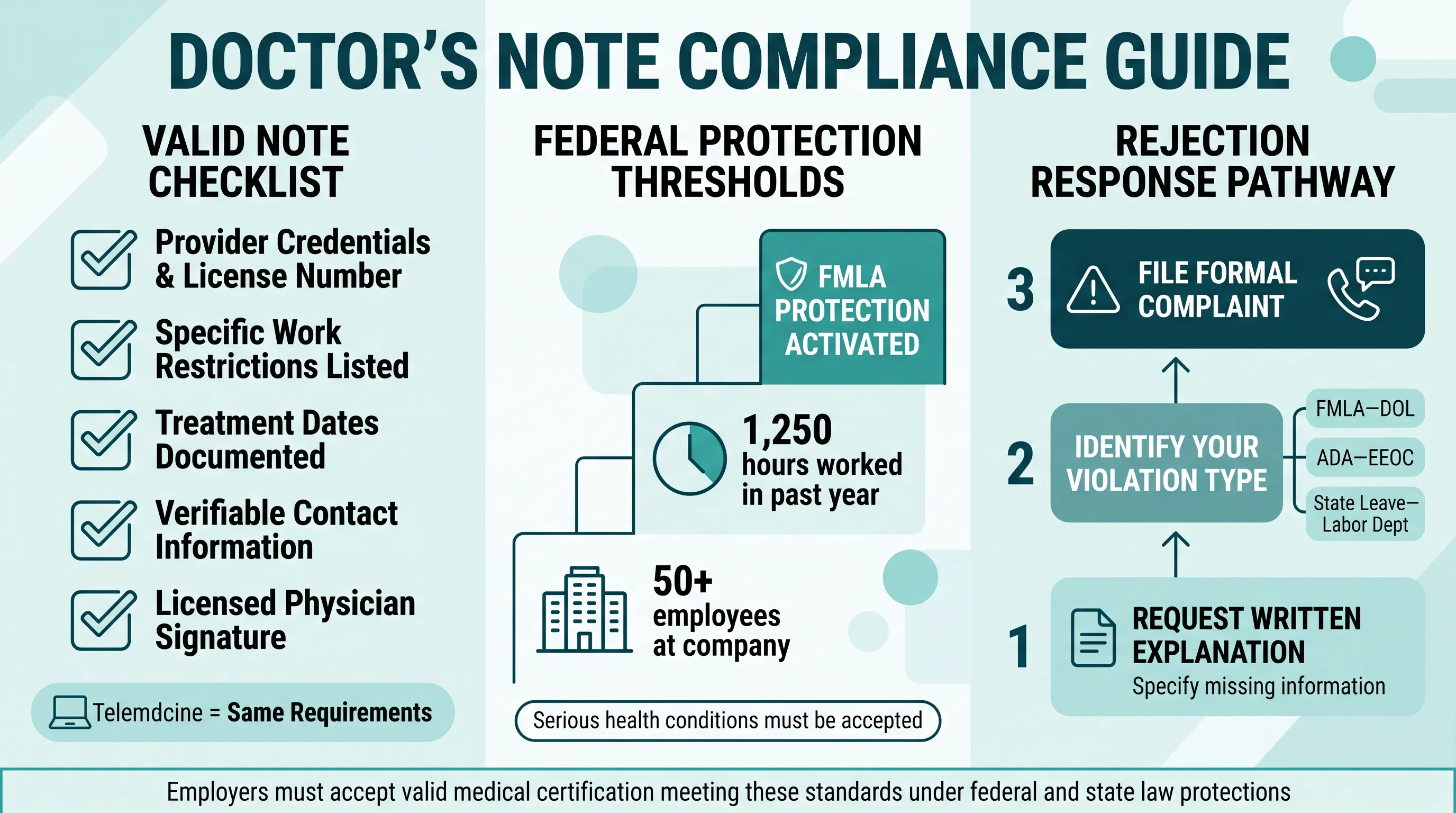
When People Ask for This Note
Requests for a doctor’s note usually follow an ordinary event.
You were sick for a few days, a manager or HR contact asked for proof, and the handbook says a note is required after a set number of missed days. Parents run into the same thing when a school attendance office asks for documentation of a missed day.
Common triggers include:
-
An absence long enough that your handbook asks for documentation
-
A return-to-work request after an illness
-
A school attendance office asking for a record of a missed day
-
An earlier note that came back because it lacked dates, a signature, or a way to reach the provider
That last case is the most common reason a note gets questioned. Notes also meet pushback when they arrive after a deadline, when the author is unclear, or when the page reads like a generic form with nothing specific to the patient.
A note tied to a real visit with a named, licensed clinician avoids many of those problems. It still does not settle the decision for the employer.

What the Visit Covers
The visit is a conversation with a licensed clinician, not a form you fill in and download. You answer questions about your symptoms and the days you missed.
The clinician reviews your answers, asks follow-up questions when needed, and decides what care and paperwork fit your situation.
If the clinician supports a note, it reflects what they learned in that visit. If the clinician does not think a note fits, you will not receive one. Many visits happen the same day, but that is not instant approval of every request, and the clinician decides each case on its own facts.
You can read more about how the process works before you begin.
Have these details ready:
-
The dates you were out or will be out
-
A short description of your symptoms
-
The name of the person or office that will receive the note
-
Any deadline in your handbook or school policy
What the Note Can and Cannot Say
A clear note gives the reader what they need to process an absence and nothing more. Most employers look for the same few details, and the guide on what most employers expect on a sick-day note covers them in more depth.
What the Note Can Include
-
The date of the visit
-
The clinician’s name and license details
-
The dates of rest or absence the clinician supports
-
Work or school guidance the clinician supports, such as rest, a limit on activity, or a return date
-
A way for the employer or school to contact the provider for verification
What the Note Cannot Do
-
It cannot promise that an employer or school will accept it.
-
It cannot cover dates the clinician did not support.
-
It does not list a diagnosis unless one is needed, because your employer usually needs dates and guidance, not your medical history.
-
It is not a blank form or a template, and we do not offer one to download.
Privacy matters here. Sharing less is often better. If your employer asks for more detail than the note gives, ask what specific information they need and why before you go back to the clinician.
Here is how that looks in practice. A clear note might say that you were seen on a given date, that the clinician supports rest from work on specific days, and that you can return on a stated date. It reads the same way a short letter would, and the reader can process it in under a minute.
A note that only says “patient was seen” gives the reader very little to work with, and that is often the note that comes back with questions.

Employer or School Still Decides
So can an employer reject a doctors note that came from a real visit? Yes. Employers and schools write their own attendance policies, and the person who reviews your note applies them.
Some will call the provider’s office to verify the note. Some states and cities also have sick leave rules that limit when an employer can ask for documentation, so check your state labor department’s website for the rules where you work.
Schools work the same way. Attendance offices set their own rules about which absences are excused and which documents they take, and a school can reject a note that does not meet them. Read your school’s attendance policy, or ask the office, before you submit anything.
Our guides for work and school notes cover the common cases.
A few habits lower the odds of a dispute. Submit the note as soon as you have it, because a late note is a common reason for pushback. Send it to the person named in the policy, not just to a coworker. Use the format the policy asks for.
And if a manager asks for something the handbook does not mention, ask HR to confirm the rule in writing. None of this guarantees a particular result, but it keeps the conversation focused on the policy instead of on you.

If Your Note is Questioned
-
Ask the reviewer to tell you in writing what is missing or unclear.
-
Check the note for dates, a signature, and provider contact details.
-
Contact the clinician’s office if a detail needs correcting, and ask whether they can clarify what they supported.
-
Send the updated note before the deadline and keep copies of everything you send.
-
Take the issue to HR or your school’s attendance office if it is not resolved.
Stay factual and polite in every message. For a full walkthrough from handbook rule to signed note, see the work sick-day guide.
Keep your tone steady if the answer is still no. Some employers want a form of their own, a different number of days, or a note from a clinic they already know.
Those are policy choices, and a clear question such as “What would you accept for these dates?” often gets a faster answer than an argument. Write down the name of the person you spoke with and the date, so you can refer back to it later.
How to Start
If you need documentation for an absence, you can begin with a visit. The steps are short.
-
Open the welcome page and answer the intake questions.
-
Speak with a licensed clinician about your symptoms and the dates you need covered.
-
If the clinician supports a note, you receive it with the dates and guidance they support.
-
Send the note to your employer or school and follow their process.
Start your visit with a licensed clinician
Keep in mind that the employer or school makes the final call. Have your handbook or attendance policy on hand during the visit so you know what the reader is looking for.
After the visit, read the note before you send it. Check that the dates match the days you missed and that your name is spelled correctly.
If something is wrong, tell the clinician’s office so they can review it. Send the note by the method your employer or school asks for, whether that is email, an HR portal, or a printed copy, and keep a copy for your own records. If the reviewer has follow-up questions, answer them calmly and point back to the dates and guidance written on the note.
Sometimes a clinician decides that a note does not fit. That can happen when the symptoms or dates do not match the request. In that case you will not receive one, and you can speak with your employer or school about other ways to document the absence.
So, can an employer reject a doctors note that a clinician did not support? Yes, and a clinician who declines to write one is not the same as an employer rejecting one.