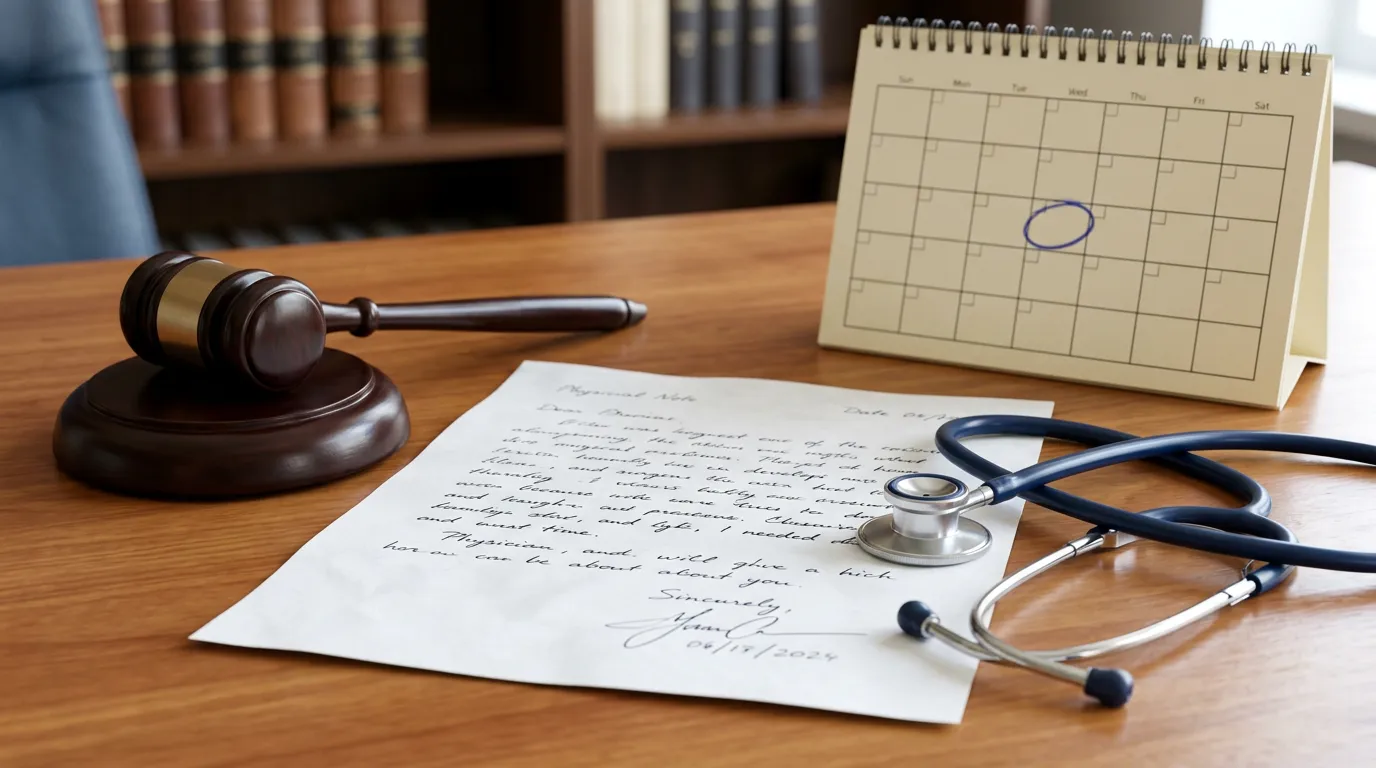


The doctors note vs sick note question usually comes up when you are too ill to work or attend class and someone asks for proof. In the US, people say “doctor’s note.”
In the UK and several other countries, “sick note” is the everyday term. Both words usually describe a short written statement from a clinician about an absence.
This guide explains what each term means, what a note covers, and who decides whether it is accepted. It also shows how to start a visit with a licensed clinician if you need one.
Doctors Note vs Sick Note: When People Ask for One
In the US, a doctor’s note is the common name for a written statement from a healthcare provider about a visit or an absence. Employers, schools, and universities may ask for one after a missed shift, a missed exam, or a run of absences.
Each organization sets its own rules, and no single threshold applies everywhere.

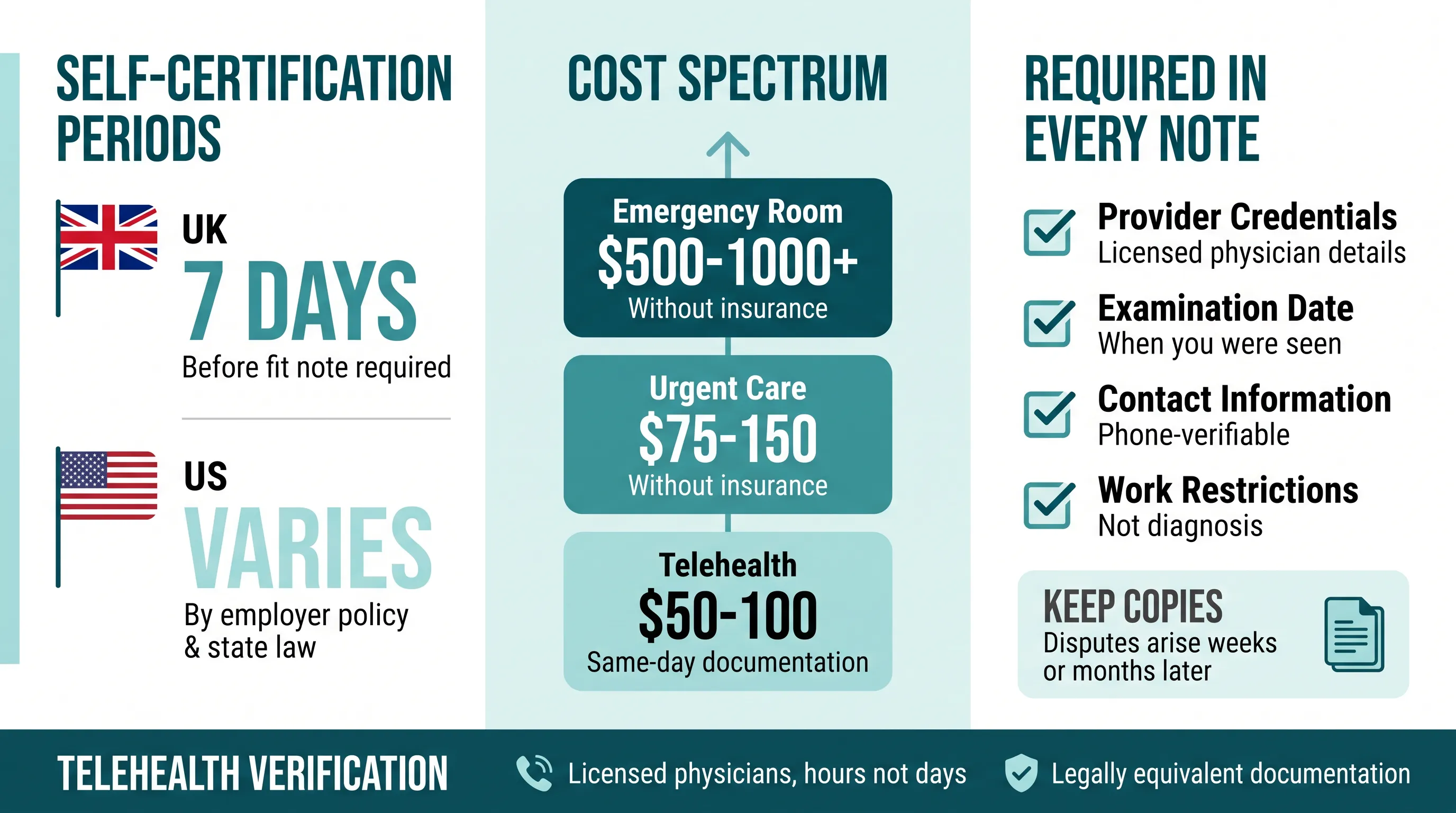
In the UK, “sick note” is the everyday name for the fit note. Under the official UK sick leave rules, employees can self-certify for the first seven days of sickness and need a fit note after that.
The NHS guidance on fit notes explains how a GP or another clinician issues one.

Common Reasons People Ask for a Note
-
A missed shift or several days off work
-
A missed exam, assignment, or class
-
A return after a contagious illness
-
A direct request from HR, a manager, or an attendance office
How the Two Terms Compare
The label matters less than the content. A note with the clinician’s details, the visit date, and clear guidance does the same job whether people call it a doctor’s note or a sick note. The real differences are local.
The UK uses a set government form for longer absences, while US employers and schools write their own policies and decide what they will accept.
| Feature | Doctor’s note (US) | Sick note (UK fit note) |
|---|---|---|
| Everyday usage | ”Doctor’s note” is the common name for a written statement from a healthcare provider about a visit or an absence. | ”Sick note” is the everyday name for the fit note, though the official name is “fit note”. |
| Who issues it | A doctor or other healthcare provider, such as a nurse practitioner or urgent care clinic. | A GP or hospital doctor. Some other registered health professionals can also issue one. |
| When it is needed | Whenever an employer or school asks for one. There is no single national rule, so it depends on their policy. | After the first seven days of sickness. Before that, the employee can self-certify. |
| Self-certification | No national system. Each employer or school sets its own rules on how many days can be covered without proof. | Employees can self-certify for the first seven days of sickness without seeing a doctor. |
| Official form | No standard national form. Notes are usually a letter or a clinic printout, though some leave programs use their own certification forms. | A standard government form called the Med3, which is the fit note. |
| Who decides acceptance | The employer or school decides what it will accept, based on its own written policy. | The employer receives the fit note and uses it to decide on sick pay and any changes to work. |
If you are unsure which term your workplace uses, read your handbook or ask HR. You will often find that “doctor’s note,” “sick note,” “medical note,” and “excuse letter” all point to the same request.
Regional wording also matters when you write to a new employer or school. If the policy says “sick note,” a doctor’s note usually meets the same need. If you are not sure, ask the office what dates, signature, and format it expects before your visit.
Doctors Note vs Sick Note: What the Visit Covers
A note starts with a visit, not a download. During the visit, a licensed clinician asks about your symptoms, when they began, and how they affect your ability to work or attend school.
The clinician then decides whether a note fits what they find. If a note is not supported, the clinician does not write one.
What the Process Looks Like
-
Answer questions about your symptoms and the dates you were affected.
-
Have a licensed clinician review your answers and your situation.
-
The clinician decides whether a note is supported.
-
If it is, you receive a signed note with the dates and guidance the clinician supports.
You can read more about how the process works before you begin. Many visits happen the same day. Same-day does not mean instant approval, because the clinician reviews every request on its own.
What to Have Ready
-
The dates you missed or expect to miss
-
Your symptoms and when they started
-
Who the note is for, such as an employer or a school
-
Any wording or format your employer or school requires
Having this information on hand keeps the visit short and helps the clinician write guidance that fits your situation.
Doctors Note vs Sick Note: What the Note Can and Cannot Say
A note is a short document. It states what the clinician can support and nothing more.
What a Note Can Include
-
The clinician’s name, credentials, and contact details
-
The date of your visit
-
The dates you should be off work or school
-
Guidance such as rest, reduced duties, or a return date
What a Note Cannot Do
-
Share a diagnosis unless one is needed
-
Cover dates the clinician cannot support
-
Promise that an employer or school will accept it
-
Work as a blank form that someone else fills in
Most employers need dates and guidance, not a diagnosis. If you want to share less, say so during the visit. The HHS overview of medical record privacy rights explains how health information is protected.
Doctors Note vs Sick Note: Your Employer or School Still Decides
Your employer or school decides whether to accept a note. A clinician can write one, but the clinician cannot control how an HR team or attendance office reads it.
No honest provider can promise acceptance.
Policies differ. Some employers ask for a note after one day, others after several days, and some never ask. Schools and universities set their own attendance rules, and an attendance office can reject a note that does not meet them.
The doctors note vs sick note wording rarely changes that outcome. The policy does.

Steps Before You Submit a Note
-
Read your handbook or attendance policy.
-
Ask what the note must include and when it is due.
-
Send the note by the deadline.
-
Keep a copy for your own records.
If a note is rejected, ask what is missing. Sometimes the fix is a clearer date range or a different format. For workplace rules, see our guide on how to get a doctor’s note for work and the work sick-day guide.
Our guides for work and school cover more situations.
Examples: How the Same Note Works in Different Situations
The doctors note vs sick note question often comes down to who does what. The clinician decides what dates and guidance the note can support. The employer or school decides whether to accept it. These three scenarios show the split.
The Shift Worker with a Stomach Bug
Marcus works evening shifts at a warehouse. He has a stomach bug and is off for two days.
He sees a clinician, who reviews his symptoms. The clinician writes a note covering those two dates. It also says he should rest, drink fluids, and return when he can keep food down.
The clinician sets the dates and the guidance. His supervisor then checks the note against the attendance policy. The employer makes the final call on whether the absence is excused.
The College Student Who Missed an Exam
Priya has the flu and misses a midterm. She sees a clinician, who documents the illness and the date she was unable to attend. The note says she was too sick to sit the exam on that day.
The clinician does not decide what happens to her grade. The professor or the dean’s office does. They may offer a makeup exam, ask for more detail, or apply the course rules as written.
The Office Employee Asked for a Note After Three Days
Dana has been out sick for three days. Her HR team asks for documentation. She sees a clinician, who writes a note with the dates the clinician can support. If Dana is ready to return, the note may suggest a light first day.
HR reviews the note under company policy. It may accept the note as is. It may also ask for different wording or more details. The clinician cannot control that outcome.
Doctors Note vs Sick Note: How to Start
When you are ready, start your visit with a licensed clinician. The visit is a real clinical review, and the note you receive is a real note issued by that clinician.
Before you begin, check your employer or school policy so you know what the note should include. Many visits happen the same day, but the clinician reviews each request, so a visit is not instant approval of every note.
Whichever term your workplace uses, the doctors note vs sick note question comes down to the same steps. Know what your employer or school asks for, have a real visit with a licensed clinician, and send the note by the deadline.