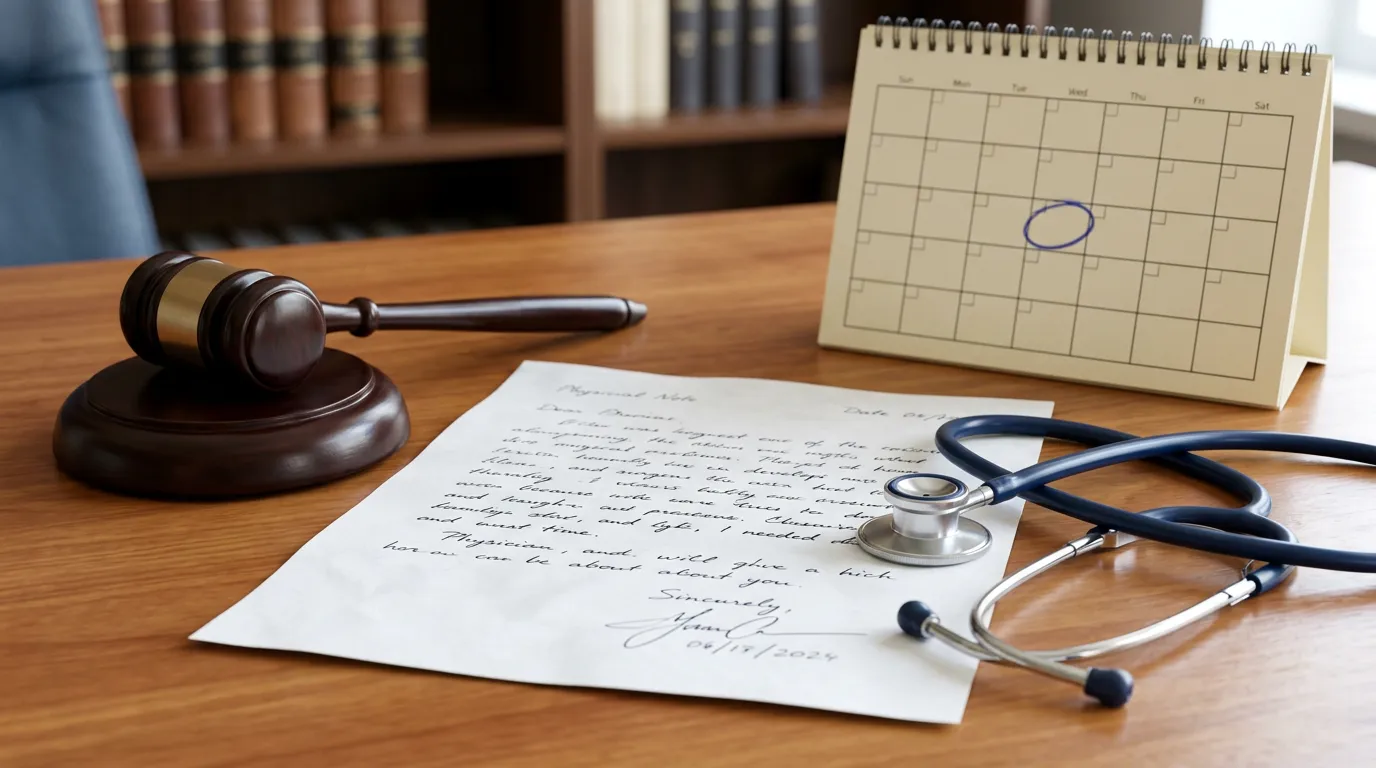


A doctor’s note for court gives written proof when sickness or injury stops you from going to your court date. Courts take these notes as proof when you ask to move your date or explain why you missed it. They have full power to accept or reject your request. The note must give exact details about your health issue, visit dates, and how your problem stops you from showing up.
This guide shows you when to ask for a health note for court. You will learn what happens during an online doctor visit and what details the note has. You will also see how courts look at these forms. You will find out how to start the steps and get answers to common questions about timing and approval..
When People Request a Doctor’s Note for Court
People most often need medical documentation when illness or injury prevents them from attending a scheduled court appearance. The request usually comes after learning about a court date that conflicts with a medical condition. A doctor’s note for court serves as formal proof that your health situation makes attendance impossible or unsafe.
Scheduled Court Dates and Medical Conflicts
You may need documentation when a chronic condition flares up near your court date, or when surgery recovery overlaps with scheduled proceedings. Courts treat planned absences differently than emergencies, so timing matters. For instance, someone recovering from knee surgery might need documentation showing they can’t sit for extended periods or travel to the courthouse. Just as with a doctor’s note for work absences, the documentation must explain your functional limitations clearly.
Jury Duty Medical Exemptions
Jury duty excuses require proof of health problems that make serving hard or impossible, based on state rules. Mental health issues like severe anxiety, long-term illnesses needing daily treatment, and surgery recovery are common reasons for medical excuses. The doctor’s note for court must state if you can sit for long hours, focus on testimony, or take part in discussions. Some courts allow short delays while others give permanent excuses based on how bad the condition is.
Emergency Medical Situations
Emergencies like hospital stays, sudden sickness, or quick surgeries require a note right away or the next day. Move fast. Courts often expect you to report a missed date within 24 hours. Some people need a note after they miss court. It explains the missed day and helps them ask for a new date without getting fined. Learning about when medical documentation helps with unexpected absences can help you avoid legal trouble. A note from an emergency visit should list admission dates, discharge instructions, and activity limits that kept you from attending.
What the Medical Visit Covers for a Doctor’s Note for Court
Telehealth Consultation Process
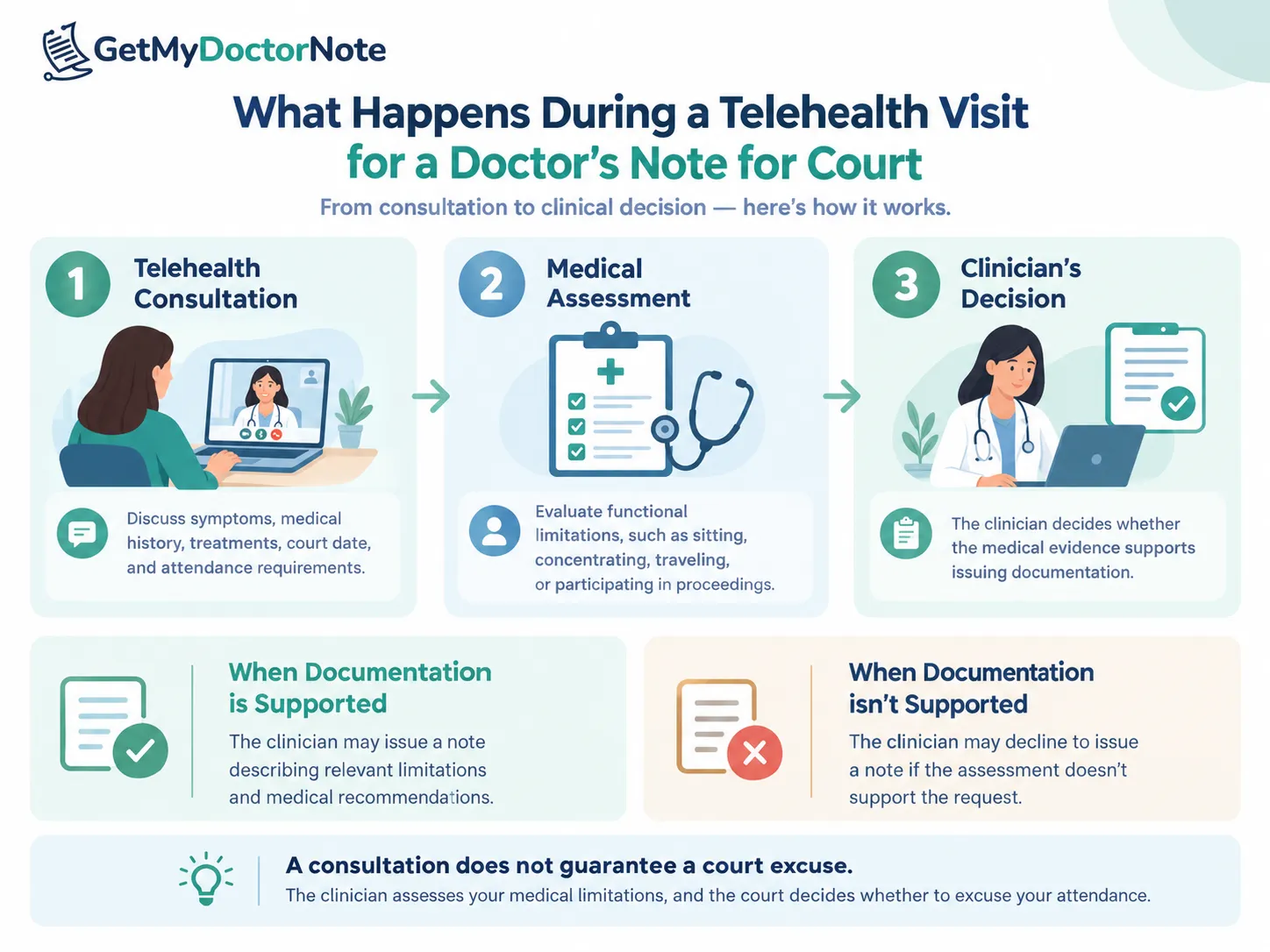
The visit starts with a quick review of your health history. You explain your symptoms, your health problem, and why you need a note for court. You will tell the doctor when your symptoms started, how they slow you down each day, and what care you have tried. The doctor asks about your court date and the event you will miss. This talk helps the provider see if your illness keeps you from going to court.
Many people use Getmydoctornote to talk with real doctors who can check their health and write the right notes. A video visit lets you do everything from home, which helps when you are too sick to travel. You must share honest facts about your pain and limits so the doctor can make the right call.
Medical Assessment for Court Documentation
A licensed doctor checks if your health problem really stops you from going to court or doing jury duty. The provider looks at what your body can and cannot do, like whether you can sit for a long time, pay attention, travel, or take part in the trial. For example, a person healing from back surgery cannot sit in a court chair for hours. A person with severe anxiety might find it hard to focus during a trial.
According to documentation of functional medical limitations, a doctor’s note serves as sufficient documentation. It must describe how a condition limits specific physical or functional activities.
The doctor writes down your care dates, your main symptoms, and medical steps for rest that apply to court dates. Mental health visits can cover high stress, sadness, or problems that make going to court very hard.
Clinician Review and Decision
Not every visit leads to a court note. The doctor must decide if your health problem truly needs a note based on your symptoms and limits. The clinician reviews your health history, your current illness, and how it stops you from going to court on your set date.
The provider gives you a note only when real health facts show you need one. This keeps both you and the doctor safe from sharing false facts with the court. If your illness does not stop you from going, the doctor will explain why a note is not right for you.
What the Note Can and Cannot Say About Doctor’s Note for Court
Required Information Courts Accept
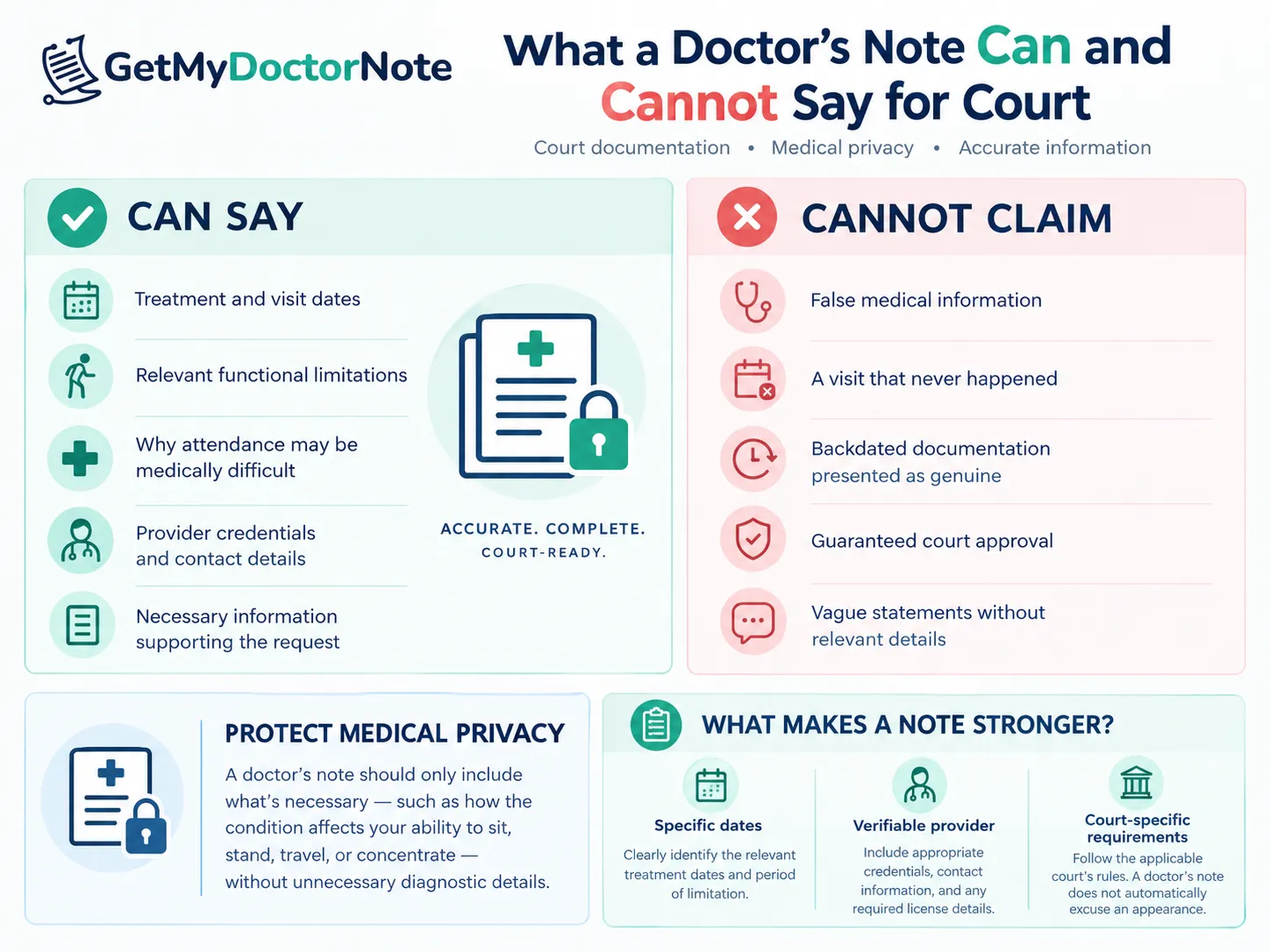
A doctor’s note for court lists your treatment dates. It shows whether a doctor saw you or the hospital admitted you. It tells your employer or school that you can stay home from work or class on certain dates.
The note states functional limitations relevant to court attendance, inability to sit, stand, travel, or concentrate, without unnecessary diagnosis details. The clinician supports your need for time off but does not diagnose conditions in detail unless medically necessary for the excuse.
According to California Rules of Court, medical documentation must be on the treating provider’s letterhead and clearly state the disability that prevents court appearance. The note must come from a licensed provider with verifiable credentials, contact information, and medical license number.
Medical Privacy Limitations
Your doctor’s note for court protects your medical privacy and still gives enough information to support your excuse. Under guidance from the U.S. Department of Health and Human Services, patients have rights over their health information. Strict limits govern which medical details people can share. Some people use Getmydoctornote to connect with clinicians who understand these privacy limits and can issue suitable documentation. The provider describes functional limitations, meaning what you cannot do, instead of detailed diagnosis information. Courts do not need that information.
What Courts Reject
Notes cannot guarantee the court will accept them or promise specific legal outcomes. They cannot provide false information, backdate documentation, or claim saw you when they did not. Generic language like “under my care” without specific dates or functional limitations often gets rejected. A doctor’s note for court must contain concrete details about your medical situation and treatment dates. Courts verify documentation by calling the provider’s office. Vague or incomplete notes trigger additional scrutiny. They often result in denial of your request for an excuse.
The Court or School Still Decides About Doctor’s Note
Why Acceptance is Never Guaranteed
A doctor’s note for court does not guarantee the court or school will excuse your absence. Courts have full discretion to accept or reject medical excuses based on their rules, your case type, and your attendance history. Criminal courts apply stricter standards than civil courts and may require advance notification within 24 hours. For example, if you miss a criminal hearing without proper notice, the judge may issue a bench warrant even with valid medical documentation.
Schools and attendance offices set their own policies about what medical documentation they accept and how much advance notice they require. Some schools accept telehealth documentation while others require in-person visits. According to the Pennsylvania Code and Bulletin, illness recognized as grounds for continuance, but the judge still decides whether to grant your request.
How Courts Verify Medical Documentation
Court clerks verify a doctor’s note for court by calling the provider’s office using the contact information on the documentation. They confirm the provider saw you on the dates listed and issued the excuse. Repeated medical excuses, same-day documentation for scheduled dates, or missing verification details trigger additional scrutiny.
Even with valid documentation, you must still follow proper procedures. Legal guidance from Nolo explains that you must submit continuance requests in advance. The judge has full authority to grant or deny them. You also need to file motions, notify clerks, and submit forms on time. Missing these steps can lead to penalties, regardless of your medical situation.
How to Start the Process of Doctor’s Note for Court
Requesting Online Medical Documentation
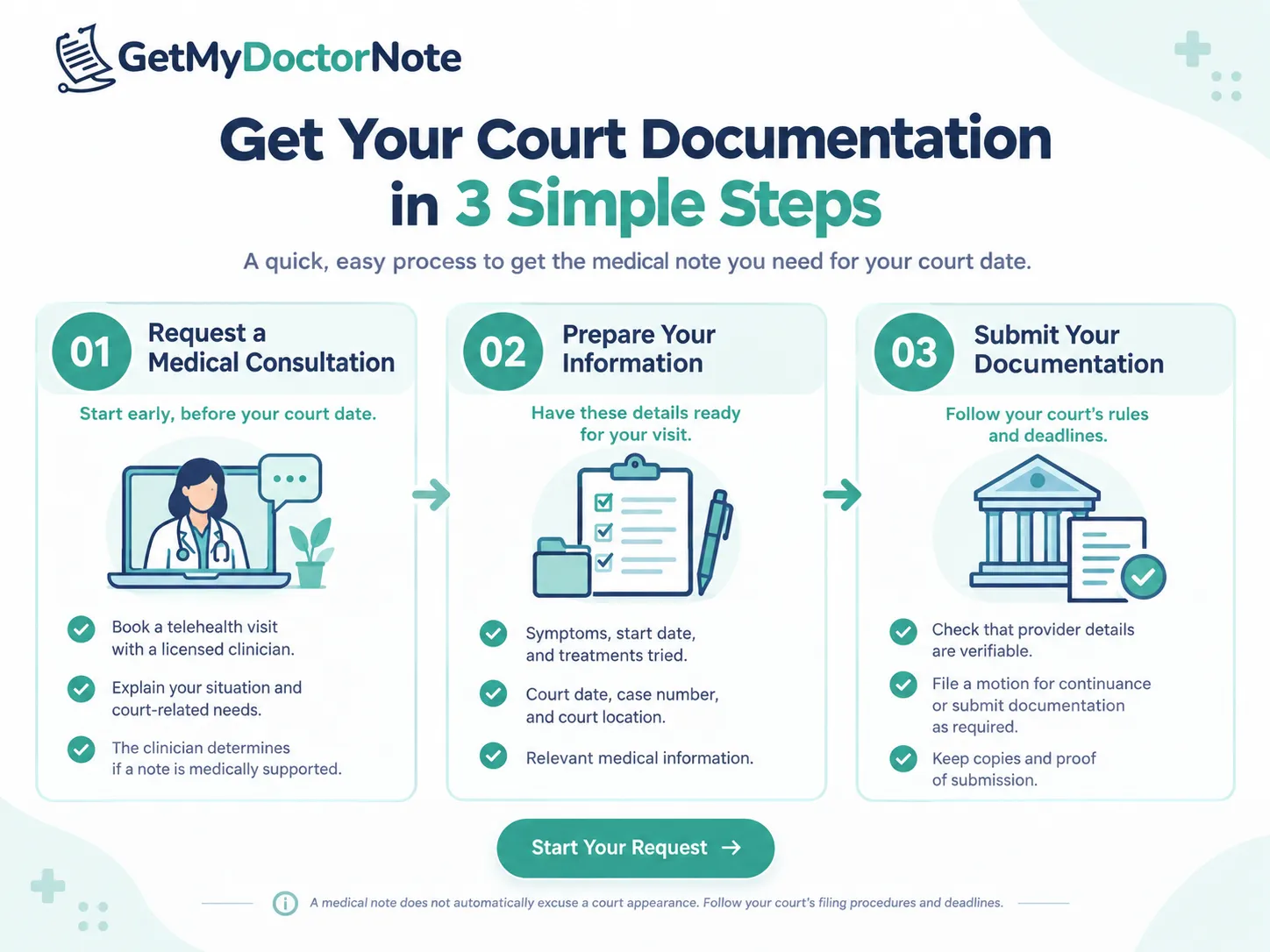
Begin by requesting a telehealth consultation through a licensed service that provides court-acceptable documentation. You can learn more about how the telehealth consultation process works from request to documentation to understand what happens during your visit. Many people use Getmydoctornote to connect with licensed clinicians. The clinicians evaluate your situation and determine whether medical evidence supports the need for a doctor’s note for court. Schedule the visit as soon as you know you’ll need documentation, not at the last minute before your court date. Waiting until the day before your hearing limits your options and may not give you enough time to submit required paperwork.
What to Prepare Before Your Visit
Gather information about your symptoms, when they started, any treatments you’ve tried, and the court date you need to miss. Have your court information ready, including your case number, court location, and scheduled date; the provider can document appropriately. This preparation helps the clinician understand your situation and create accurate documentation that addresses your specific needs. According to guidance on filing a motion for continuance, you must follow proper procedures when you cannot appear due to medical reasons.
After the clinician visit, you’ll receive documentation that includes provider credentials and contact information for verification. A doctor’s note for court must come from a licensed provider with verifiable details that court clerks can confirm. File your motion for continuance or submit documentation to the court clerk according to your jurisdiction’s procedures and timing requirements. Keep copies of all documentation and confirmation that you submitted it by the required deadline. This protects you if questions arise about whether you followed proper notification procedures.
Conclusion
A doctor’s note for court documents your medical condition, but it never guarantees approval. The judge or clerk makes the final call under local rules and reviews what you submit closely. The note must come from a real visit with a licensed provider who evaluates your situation and decides whether your condition justifies an absence. Generic templates and backdated notes get rejected, because clerks check credentials and call provider offices to confirm the visit happened.
Timing matters as much as content. Request your documentation the moment you know you can’t attend, not the day before your hearing. File your motion or paperwork by your jurisdiction’s deadline, and keep copies of everything you submit. Even valid medical proof fails if you skip the proper procedure.
If you need a doctor’s note for court or jury duty, request a telehealth consultation with Getmydoctornote today. You’ll speak with a licensed clinician who evaluates your condition and, if appropriate, provides verifiable documentation you can file with confidence.