


A migraine can pull you out of work or school with little warning.
If you need a doctors note for migraine, the process is easier when you know what the clinician will ask, what the note can say, and who decides what happens next.
This page explains the process in order. It covers when people ask for a note, what happens during the visit, and what the note can and cannot say. It also explains how employers and schools treat the note, and how to start.
GetMyDoctorNote connects you with a licensed clinician for a real visit. It does not offer blank templates or downloads.
When People Ask for a Doctors Note for Migraine
Most people ask for a note after a migraine causes a missed shift, a missed class, or a missed exam. Some need it after the fact because a manager or attendance office asks for proof.
Others need it before they return, because a policy requires documentation for absences of a certain length.
Common situations include:
-
A migraine attack that keeps you from working or driving for a day or more.
-
A school absence that the attendance office wants documented.
-
A late assignment or missed test that needs a medical reason on record.
-
Repeat attacks, where you want a clinician to document the pattern.
A note is a record of a visit. It does not replace care. If your migraine is severe, new, or different from your usual attacks, treatment comes first and paperwork second.
Seek emergency care right away if you have the sudden worst headache of your life, vision loss, confusion, weakness on one side of your body, trouble speaking, or a headache after a head injury. The note can wait.
What the Visit Covers
Your note comes from a visit with a licensed clinician.
The clinician asks about your symptoms, decides whether they fit a migraine, and decides what time away from work or school the visit supports. You can read more about how the documentation process works before you begin.
Questions the Clinician Asks
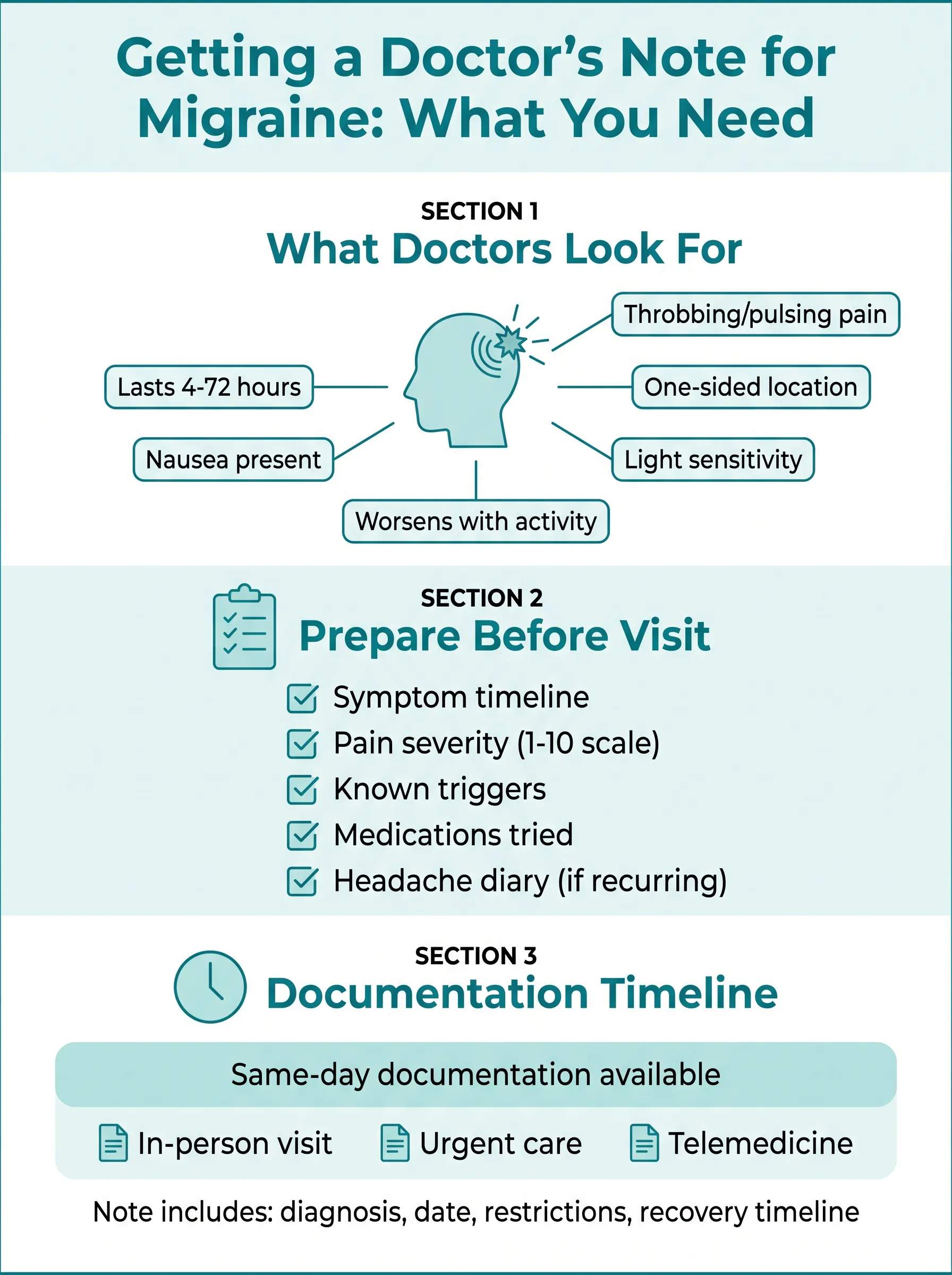
Clinicians look for patterns that fit a migraine. They ask about throbbing or pulsing pain, often on one side of the head. They ask about sensitivity to light or sound, nausea, and whether activity makes the pain worse. Attacks usually last from 4 to 72 hours. According to Cleveland Clinic, providers weigh these patterns, along with how long the pain lasts, when they diagnose migraines.
The clinician also asks how the attack affected your day. Could you work at a screen? Could you drive? Could you sit through class? Your answers help the clinician decide what work or school guidance fits your situation.
What to Prepare Before the Visit
A few minutes of preparation makes the visit faster and the note more accurate. Have these details ready:
-
When the pain started and how long it has lasted.
-
Your pain level on a scale of 1 to 10.
-
Triggers you noticed, such as certain foods, stress, or poor sleep.
-
Medications you tried and whether they helped.
-
The dates you missed or expect to miss.
-
What your employer or school asks for in a note.
If you have repeat attacks, a simple headache diary helps. It shows how often attacks happen and what seems to trigger them. Your clinician can use that record to understand your pattern.
How Fast Can It Happen?
Many visits happen the same day. That timing helps when a deadline is close. It is not instant approval of every request. The clinician reviews your symptoms and decides what the visit supports, so answer questions fully and honestly.
Expect questions about when the attack started, how long it lasted, and whether you took any medication. If the visit does not support time away, the clinician will say so, and you can still discuss treatment options for future attacks.
What the Doctors Note for Migraine Can and Cannot Say
A clinician writes only what the visit supports. That keeps the note accurate, and it protects your privacy.
What the Note Can Include
-
The date of your visit.
-
The clinician’s name and credentials.
-
The dates of absence the clinician supports.
-
Work or school guidance, such as rest, a return date, or temporary limits on duties.
-
Contact details so an employer or school can verify the visit.
The note usually states that you were seen and what guidance the clinician supports. It is not a diagnosis dump. A diagnosis appears only when it is needed, and you can ask the clinician what the note will say before you share it.

What the Note Cannot Do
-
It cannot promise that an employer or school will accept it.
-
It cannot cover days the clinician does not support.
-
It cannot state symptoms or findings the visit did not show.
-
It cannot replace treatment for a migraine that needs care.
If your symptoms do not support time away, the note will not say they do. That honesty is part of what makes a note credible when someone checks it.
For more on sick days and absence rules, read our work sick-day guide.
Employer or School Still Decides
Your employer or school sets its own rules for absence documentation.
Some accept any note from a licensed clinician. Others ask for a specific form, a verification call, or a note that covers certain dates. No clinician or service controls that decision, and nobody can promise acceptance.
The table below shows who handles each part of the process. The clinician writes what the visit supports. Your employer or school decides what to do with it.
| Topic | What the clinician’s note covers | What the employer or school decides |
|---|---|---|
| Absence dates | The visit date and the dates the clinician supports, such as “unable to attend May 6 to May 8.” A blank template has empty date fields and no clinical judgment behind them. | Whether those days count as paid sick leave, an excused absence, or unpaid time under its attendance policy. |
| Work or school guidance | Adjustments based on the visit, such as rest, reduced screen time, scheduled breaks, a flexible start time, or a phased return. | Which adjustments it can offer, and whether they fit the job duties or class schedule. |
| Diagnosis details | May name migraine or use a general phrase such as “medical condition,” depending on what you agree to share. Treatment plans and full history stay in the medical record. | Whether to ask for more detail. Privacy rules in many places limit what it can require. |
| Verification | The clinician’s name, credentials, contact details, and issue date, which show that a real visit took place. | Whether to contact the practice to confirm the note, and which checks its policy permits. |
| Acceptance of the note | A professional opinion about your fitness to attend. The clinician cannot promise acceptance. | The final call: accept the note, ask for more documentation, or decline it, based on its policy, contract terms, and local law. |
Use this split when you plan your request. Ask your employer or school what it needs in the “decides” column first.
Then tell the clinician about those needs during the visit, so the note can address them where the visit supports it. For more on work and school absences, browse our guides for work and school.
A few steps lower the odds of a problem:
-
Read your handbook or attendance policy before the visit.
-
Ask HR or the attendance office what a note must include and who should receive it.
-
Submit the note as you received it, and do not edit it.
-
Keep a copy, along with the date you sent it and the person who received it.
If the note is for a job, our guide to a doctor’s note for work covers what employers commonly ask for. Schools vary even more. An attendance office may accept a short note for a single day and ask for more detail after repeat absences.
If someone questions your note, stay calm and ask what they need. A short call to HR or the attendance office often clears up the issue. Ask whether they need the note sent directly, whether a copy is enough, and whether a specific date range must appear.
You do not have to share more medical detail than the note contains. The note confirms the visit and the guidance it supports. It does not need to include your full medical history.
Two Common Situations
Consider a warehouse worker who missed two shifts after a long migraine attack. The attendance policy asks for a note after any absence of two days or more.
The worker sees a clinician, shares the dates missed, and asks the clinician to state the dates the visit supports. The worker then sends the note to HR as received. HR still reviews it under company policy.
Now consider a college student who missed a midterm. The professor wants documentation before offering a makeup exam. The student checks the syllabus, asks the attendance office who receives the note, and shows the clinician the exam date.
The school decides whether a makeup exam is allowed. The note only records what the clinician supports.
In both cases, the person who asks early about the rules saves time later. A note works best when it matches what the employer or school asked for before the visit. Asking early also gives you time to gather dates, check deadlines, and plan your return.
If the policy changes partway through your absence, ask the clinician for an updated note rather than stretching the original one.
How to Start
You can start in a few minutes. Follow these steps:
-
Check what your employer or school asks for in a note.
-
Gather your symptom details and the dates you missed.
-
Open the welcome page and begin your visit.
-
Answer the clinician’s questions and ask what the note will say.
-
Review the note, then send it to your employer or school.
The clinician decides what the visit supports, and your employer or school decides whether to accept the note.