


A doctor’s note for ear infection provides the medical documentation you need when pain and pressure force you to miss work or school. Ear infections can make it hard to focus, sleep, or function normally. Most employers and schools require proof from a licensed provider before approving your absence. The note confirms your diagnosis, explains any activity restrictions, and shows the dates you need off.
This guide walks you through when you need documentation and what happens during a telemedicine visit. You’ll learn what information your note will include, how employers and schools review these notes, and how to get started with an online evaluation. You’ll learn what medical details providers can share and what privacy rules protect. You’ll also learn how to obtain same day documentation when you can’t wait for an in-person appointment.
When People Need a Doctor’s Note for Ear Infection

Work Absence Requirements
Most employers ask for a doctor’s note for ear infection after three sick days in a row. Some companies look at patterns instead. If you call in sick many times in one month, your boss may ask for a note, even for a single day off. According to Centers for Medicare & Medicaid Services, rules vary by company size and state. Getmydoctornote connects you with state-licensed doctors who give you proof of your visit the same day.
School and College Policies
Schools request notes for absences exceeding two days. Athletic participation clearance often requires medical documentation before a student can return to sports activities. When returning from conditions that could spread to other students, schools need proof that the student can safely attend classes. Rhode Island Department of Health outlines documentation requirements that support school attendance policies. College students may need a doctor’s note for an ear infection to request assignment extensions, exam rescheduling, or attendance policy exceptions.
When Medical Proof Becomes Necessary
Jobs involving customer interaction, phone communication, or hearing-dependent tasks may require documentation even for shorter absences. A call center representative with an ear infection affecting hearing ability needs medical clearance before returning to phone duties. Some workplaces request notes for any sick day usage, though this varies by employer. Documentation protects both you and your employer by confirming that time away serves a medical purpose and that you can safely return to work duties. This is covered in detail in official government guidance for notes.
What the Telemedicine Visit Covers
A telemedicine visit for ear infections follows a structured approach to assess your symptoms and determine if you need time away from work or school. The consultation provides a doctor’s note for ear infection with verifiable contact information, allowing your employer or school to confirm authenticity.

Symptom Assessment Process
The physician starts by asking detailed questions about your symptoms. You’ll describe pain location, severity level, and how long you’ve experienced discomfort. The doctor asks about hearing changes, any discharge from your ear, and whether you have a fever.
Your provider also wants to know about recent water exposure, such as swimming or showering, and any upper respiratory infections you’ve had recently. These details help determine which type of ear infection you’re experiencing. The process resembles how physicians assess other bacterial infections, similar to getting a doctor’s note for strep throat from home.
Clinical Evaluation Methods
Video consultations allow your physician to visually examine external ear structures. The doctor can see redness, swelling, or discharge around your outer ear. However, some conditions require in-person examination with an otoscope to view internal structures.
Clinicians evaluate whether your symptoms match outer ear infection (swimmer’s ear), middle ear infection, or inner ear involvement with balance issues. Each type affects your ability to work or attend school differently.
At Get My Doctor Note state-licensed physicians use these assessment methods to provide accurate documentation.
Treatment Recommendations
Your physician discusses pain management options and whether antibiotics are needed based on symptom severity and duration. The doctor explains expected recovery timelines so you understand when you’ll feel better.
The physician determines how long you should stay home based on your symptoms, job requirements, and expected treatment response. A doctor’s note for an ear infection includes this recommended absence duration with specific return dates. Visits last 10 to 15 minutes, and you receive documentation immediately after consultation with phone verification contact information.
What the Doctor’s Note Can and Cannot Say

Required Documentation Elements
A doctor’s note for an ear infection must include the visit date, the provider’s name and credentials, and recommended absence dates. The note also specifies return-to-work or return-to-school guidance based on your symptoms and treatment plan. These elements establish that a licensed clinician examined you and support your need for time away. Without these details, employers or schools may reject the documentation as incomplete.
Privacy Protections and Limitations
HIPAA protections generally stop employers from asking for specific diagnoses, treatment details, medication names, or test results. The exception is when a job-related accommodation requires that information. The note says the clinician examined you and supports time away for medical reasons. It does not disclose private health information. For example, your employer can see that you need three days off. It cannot require you to say which antibiotic you are taking. Schools may receive more detailed information than employers. This is most common for athletic clearance and communicable disease protocols.
A doctor’s note for ear infection documents medical necessity but doesn’t override attendance policies or guarantee paid leave approval.
Understanding how the documentation process works from consultation to delivery helps you meet your employer’s requirements. The note provides medical support for your absence, but your employer or school makes the final decision on acceptance.
Verification Information
Verifiable contact information allows employers or schools to confirm the note’s authenticity through phone verification 24/7. This typically includes a direct phone number to the medical practice or telemedicine platform. When your employer calls, staff can confirm that you had an appointment and that the documentation is legitimate. This verification step protects both you and your employer from fraudulent notes while respecting your privacy about specific medical details.
Employer or School Still Decides Acceptance
A doctor’s note for ear infection provides medical support for your absence. Your employer or school makes the final call on whether to accept it. The note doesn’t guarantee approval. It documents that a licensed physician examined you and supports your need for time away.
Documentation Review Process
Employers verify that the documentation comes from a legitimate medical provider. They check that the note includes required elements like visit date, provider credentials, and recommended absence dates. Your workplace also confirms the note matches the dates you were absent and meets their sick day policies for timing and content.
Schools review notes against attendance office standards. Many require specific language about whether the condition is contagious or if activity restrictions apply. Athletic departments often need clearance statements before allowing students to return to practice or competition.
Common Rejection Reasons
Notes get rejected when they lack required information or come from sources the employer can’t verify. If the absence dates on the note don’t match your actual time away, most workplaces won’t accept it. State-licensed telemedicine providers offering phone verification meet authentication standards at most schools and workplaces.
Your Rights and Next Steps
Federal sick leave laws protect your right to use accrued sick time for medical examination and incapacity. Documentation requirements vary by employer size and state. If your employer rejects legitimate medical documentation, review your employee handbook first. Then consult HR or seek guidance from your state labor department about your options.
How to Start Getting Your Doctor’s Note
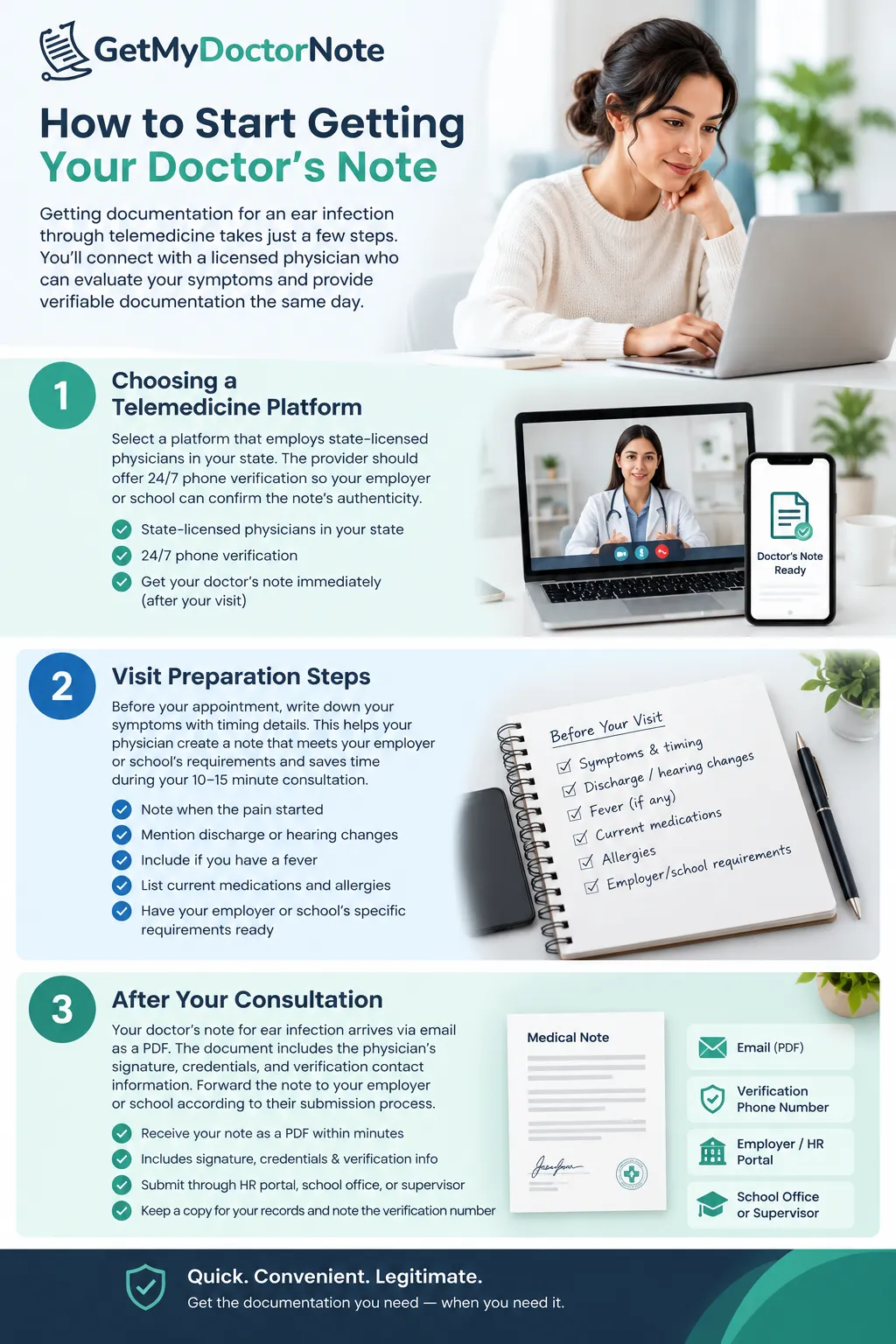
Getting documentation for an ear infection through telemedicine takes just a few steps. You’ll connect with a licensed physician who can evaluate your symptoms and provide verifiable documentation the same day.
Choosing a Telemedicine Platform
Select a platform that employs state-licensed physicians in your state. The provider should offer 24/7 phone verification so your employer or school can confirm the note’s authenticity. Look for services that deliver your doctor’s note for ear infection immediately after your visit ends. Most platforms provide documentation as a PDF within minutes of completing your consultation.
Visit Preparation Steps
Before your appointment, write down your symptoms with timing details. Note when the pain started, whether you have discharge or hearing changes, and if you’ve had a fever. List your current medications and any allergies. According to telemedicine documentation guidance, having your employer or school’s specific requirements ready helps your physician create a note that meets their standards. This preparation saves time during your 10-15 minute consultation.
After Your Consultation
Your doctor’s note for ear infection arrives via email as a PDF. The document includes the physician’s signature, credentials, and verification contact information. Forward the note to your employer or school according to their submission process. Some workplaces use HR portals, while schools may require delivery to attendance offices or direct supervisor submission. Keep a copy for your records and note the verification phone number. Your employer or school may contact the provider to confirm the documentation is real.
Conclusion
A telemedicine service can give you a Doctor’s Note for Ear Infection quickly. You connect with a state-licensed physician, who reviews your symptoms and provides a note that meets most workplace and school rules. The process takes 10 to 15 minutes from start to finish. The note includes contact details so employers or schools can confirm it is genuine. The note supports your absence, but your employer or school decides whether to accept it under its own policies. Knowing what the note contains helps you set realistic expectations.
It states that a physician examined you and supports time away from work or class, without revealing private health details. Most ear infections improve within 3 to 5 days with proper treatment. How long you need to stay home depends on your symptoms and job duties. If you have ear infection symptoms and need medical documentation for work or school, Get Doctor’s Note for Ear Infection can help. We connect you with state-licensed physicians who can provide a verifiable doctor’s note on the same day.