


A doctors note for anxiety gives you the medical proof you need when anxiety makes it hard to work or go to school. It confirms your condition to your employer or school. It also helps protect your job or place in class while you recover. It creates a record that may support accommodations later. Many people wait too long to ask for one. They often don’t know when anxiety qualifies for medical leave, what happens at the appointment, or how their workplace will respond.
This guide explains when anxiety calls for a doctor’s note and what clinicians check during your visit. You’ll learn what the note includes and protects, how employers and schools decide whether to accept it, and what legal protections apply. It also covers three ways to start, based on your timeline and needs.
When People Ask for a Doctors Note for Anxiety

You might need a doctor’s note for anxiety when symptoms stop you from meeting work or school responsibilities. Not every stressful day requires medical documentation, but certain situations cross the line from normal stress into disabling symptoms that need professional evaluation.
Clinical Scenarios That Warrant Medical Documentation
Severe anxiety with panic attacks can cause chest pain, shortness of breath, or dizziness. These symptoms are valid reasons to request medical leave. Prolonged insomnia, where you lose sleep for several nights in a row, can reduce focus and make safe work harder. Medication changes that cause nausea, tiredness, or mental fog may also require time off while your body adjusts to the new treatment.Burnout with physical symptoms like headaches, digestive problems, or muscle tension becomes a medical issue when these symptoms interfere with daily function. Workplace stress alone doesn’t automatically warrant medical leave. However, when anxiety symptoms become disabling, you can’t concentrate, or you experience physical symptoms like chest pain or nausea, medical documentation for workplace absence becomes appropriate. Sleep disruption that affects your safety also warrants documentation.
Appropriate Absence Duration Based on Symptoms
Most anxiety-related absences range from 1-3 days for acute episodes. Medication changes or severe stress reactions that require recovery time before returning to normal activities typically warrant 3-5 days. Your clinician determines this duration based on symptom severity and what your job or school demands, not on what you request.
Schools and employers have different thresholds for requiring notes. Most workplaces require documentation after 3 or more consecutive days. Schools vary by institution and may require notes for single absences during exam periods. Understanding documentation requirements for medical absences helps you prepare the right paperwork.
When Emergency Care is Needed Instead
If you’re having thoughts of suicide, strong urges to hurt yourself, or you can’t get through daily tasks, please get emergency psychiatric care. Go to a hospital or call a crisis line instead of asking for a routine doctor’s note for anxiety. These situations need help right away, not a scheduled appointment. Emergency rooms and crisis centers can give you the care you need when symptoms become dangerous or feel like too much to handle.

What the Clinical Visit Covers
Symptom Assessment and Medical History
Your clinician will want to hear about your symptoms. Tell them when they started and how strong they feel. You’ll talk about any panic attacks or sleep trouble, and you can mention physical signs too, like chest tightness or stomach problems. The National Institute of Mental Health suggests writing your symptoms down before the visit so nothing slips your mind. Your clinician will also go over your health history, including any earlier anxiety diagnosis, the medicines you take now, and any recent stressful events. They may ask if you’re already seeing a therapist or psychiatrist.
Physical Health Screening
Many clinicians screen for physical causes of anxiety symptoms.
Other causes can look like anxiety. These include thyroid problems, caffeine or stimulant use, and other medical conditions. This step rules out physical problems that cause similar symptoms but need different treatment. A physical checkup helps confirm that your doctors note for anxiety is accurate and that no health problem was missed.
Absence Duration Determination
Based on symptom severity and your work or school demands, the clinician determines appropriate absence duration. This isn’t a negotiation but a clinical judgment about recovery time needed. Most providers at Getmydoctornote consider both your symptoms and functional capacity when documenting recommended time off. The visit typically lasts 10-20 minutes for telehealth consultations or 15-30 minutes for in-person evaluations. Understanding how the process works from initial consultation to receiving documentation helps you prepare for what to expect. The clinician documents findings in your medical record, which serves as the basis for your doctor’s note for anxiety.

What the Note Can and Cannot Say
Standard Components of Medical Documentation
A doctor’s note for anxiety confirms your medical absence without disclosing private health details. It lists the physician’s name and credentials and the date of your evaluation. It also states that you were seen for a medical condition. The note gives the dates of recommended absence and your return-to-work or return-to-school date. Some notes include basic restrictions, such as “reduced stress environment recommended” or “modified schedule for two weeks,” without naming the underlying mental health condition.
HIPAA Privacy Protections
Your doctors note for anxiety does not include your diagnosis, specific symptoms, therapy details, or medication names unless you request this information be disclosed. Most notes state only “medical condition requiring absence” to protect your privacy. According to federal HIPAA privacy rights, clinicians cannot disclose mental health details without your explicit written consent. Employers and schools receive only the minimum information needed to process your absence. This protection exists because mental health records require the same privacy safeguards as any other medical information.
Information Employers and Schools Cannot Request
Your employer can’t legally ask for your diagnosis, therapy notes, or treatment details when you turn in a doctor’s note for anxiety. They can check that the note is real by calling the doctor’s office to confirm your dates and that you were seen. But they can’t ask for medical details. If your boss or school wants more than the note shows, you can say no. They have to accept the note as written, or explain in writing why it doesn’t meet their rules.
Understanding how workplace sick-day policies interact with medical documentation helps you know what information you must provide versus what remains private.
Employer or School Still Decides Acceptance
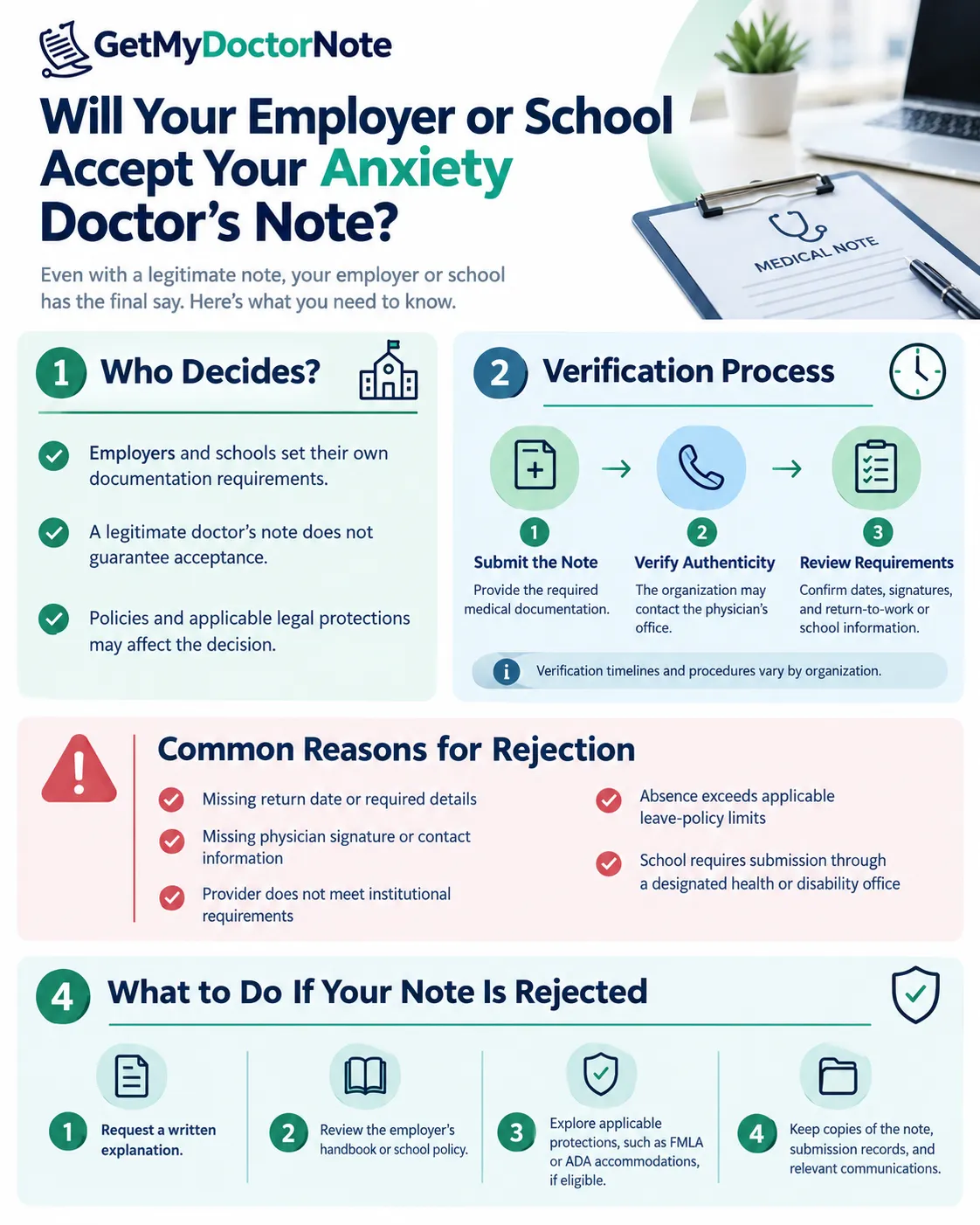
Even when your doctor’s note for anxiety is legitimate and properly formatted, your employer or school holds final authority to accept or reject it. Their attendance policies determine whether your documentation meets their requirements. This decision-making power exists regardless of how thorough your medical documentation appears.
Verification Process and Timeline
Most organizations verify medical notes by calling the physician’s office to confirm authenticity. They check the dates, your evaluation status, and your return-to-work or return-to-school clearance. This verification typically happens within 1-3 business days of submission. The physician’s office confirms you were seen without disclosing your diagnosis or treatment details.
Common Reasons for Rejection
Notes get rejected when they lack required information. Missing return dates, absent physician signatures, or incomplete contact information all trigger denials. Some organizations maintain approved provider lists and reject documentation from outside physicians. Your absence duration might exceed their sick leave policy limits, requiring additional documentation you haven’t provided. Schools often require notes to go through student health services or disability offices rather than directly to professors. Each institution sets its own acceptance criteria, and these vary widely.
What to Do If Your Note is Questioned
Request a written explanation if your doctor’s note for anxiety is rejected. Review your employee handbook or student policies to understand their specific documentation requirements. Check whether your absence qualifies for legal protections like FMLA or ADA accommodations. Document all communication about your absence including submission dates, who you spoke with, and any negative treatment following your medical leave. This creates a record if discrimination occurs.
Your Legal Rights When Using Anxiety Documentation
Americans with Disabilities Act Coverage
The ADA protects employees with anxiety disorders that greatly limit major life activities, such as concentrating, sleeping, or interacting with others. The Equal Employment Opportunity Commission (EEOC) says employers must provide reasonable accommodations when you present a doctor’s note for anxiety. Accommodations may include adjusted schedules or lower-stress assignments. These protections apply only when your condition meets the legal definition of a disability. That definition requires documentation showing how anxiety affects daily life.
Students have similar protections under Section 504 and the ADA. Schools must provide accommodations like extended deadlines, reduced course loads, or excused absences with proper medical documentation. Your school must work with you to identify reasonable adjustments that allow you to continue your education while managing your condition.
State Mental Health Leave Laws
Several states, including California, Oregon, New York, and Washington, have mental health parity laws. These laws treat mental health absences the same as physical health absences. If you submit a doctor’s note for anxiety, you may be covered by paid sick leave. You have the same rights as someone who takes time off for the flu or a broken bone. Your employer can’t ask for different paperwork for mental health conditions than for physical illnesses.
Protection from Retaliation
Employers cannot retaliate against you for requesting medical leave or accommodations. Firing, demoting, or creating a hostile work environment after medical absence violates federal discrimination laws. If your employer questions the legitimacy of your anxiety, they may require a second opinion from a company-selected physician. They must pay for this evaluation. They cannot require you to see a specific provider of their choice. Document all communication about your doctor’s note for anxiety. Include submission dates and any negative treatment following your medical leave. This creates a record if discrimination occurs.
How to Start Getting Your Doctor’s Note
You have three main options for getting a doctor’s note for anxiety, each with different timelines and costs. Your choice depends on how quickly you need documentation and whether you already have a healthcare relationship.
Telehealth Services for Same-Day Documentation
Online telehealth services connect you with licensed physicians within 15 minutes to 24 hours. This is the fastest option if you don’t have an established provider. These services provide physician-signed notes that employers and schools can verify by phone. You complete a brief online questionnaire about your symptoms, connect with a clinician through video or phone, and receive your documentation electronically within hours.
Using Your Existing Healthcare Provider
Your existing therapist, psychiatrist, or primary care doctor is ideal if you have established care. They know your history and can provide detailed documentation. However, availability may require waiting several days for an appointment. If you need time off immediately, telehealth becomes the better choice. Your regular provider can also coordinate with your workplace if you need extended leave or accommodations.
Cost and Insurance Coverage
Most health insurance plans cover mental health visits at the same rate as physical health under the Mental Health Parity Act. You’ll typically pay only a copay of $10-50. Telehealth visits are often fully covered with no copay. Without insurance, expect to pay $75-150 for telehealth consultations, $100-200 for urgent care visits, and $150-300 for in-person primary care or psychiatrist appointments.
Employee Assistance Programs through your workplace often provide 3-8 free counseling sessions per year. These can include a doctor’s note for anxiety provision at no cost to you. Check with your HR department about this benefit. According to the Department of Labor, eligible employees can also take job-protected leave when unable to work due to severe anxiety.
To start the process, gather information about your symptoms, how long they’ve affected you, any current medications, and the dates you need documented. This helps the clinician complete your evaluation efficiently and provide accurate documentation for your absence. Get Your Doctor’s Note online today.
Conclusion
Getting a doctor’s note for anxiety comes down to understanding when your symptoms require medical absence. You need to know what the evaluation process involves and how to protect your rights during the entire process. Your note must include specific dates, physician credentials, and return information while keeping your diagnosis private under HIPAA protections. Employers and schools make the final acceptance decision. The ADA and state mental health laws provide legal backing when your anxiety substantially limits your daily functioning.
Keep copies of all medical documentation and written communication about your absence. This creates a record if you face discrimination or retaliation. Most anxiety-related absences last 1-3 days for acute episodes, with proper documentation giving you the best chance of approval.
If you need a doctor’s note for anxiety quickly, Getmydoctornote connects you with licensed physicians who understand workplace and school documentation requirements. Start your confidential evaluation today and receive physician-signed documentation that employers and schools can verify.