


A doctor’s note for bereavement is a document a licensed clinician issues after a visit, confirming that you were medically seen and need time away during grief.
A clinician can document an absence after an online visit when clinically appropriate. The employer decides whether to accept the note and sets its own leave policy. Losing a loved one is hard enough, and the paperwork should not add to it. This guide covers when you need one, how to request it, and what to expect.
This guide walks you through when you need bereavement documentation and how to request it quickly from your healthcare provider or online services. You’ll also learn what your legal protections are and how to communicate with your employer or school.
You’ll learn about different types of medical notes available, typical costs and insurance coverage, and how to avoid common mistakes that delay your leave approval. We’ll also cover how to support your mental health during this time while meeting workplace or academic requirements.
Doctor’s Note for Bereavement: When You Need One
Losing a loved one affects you physically and emotionally. You may need time away from work or school to grieve and handle arrangements. A doctor’s note for work can protect your absence when standard bereavement leave isn’t enough.
Employer Requirements for Bereavement Leave
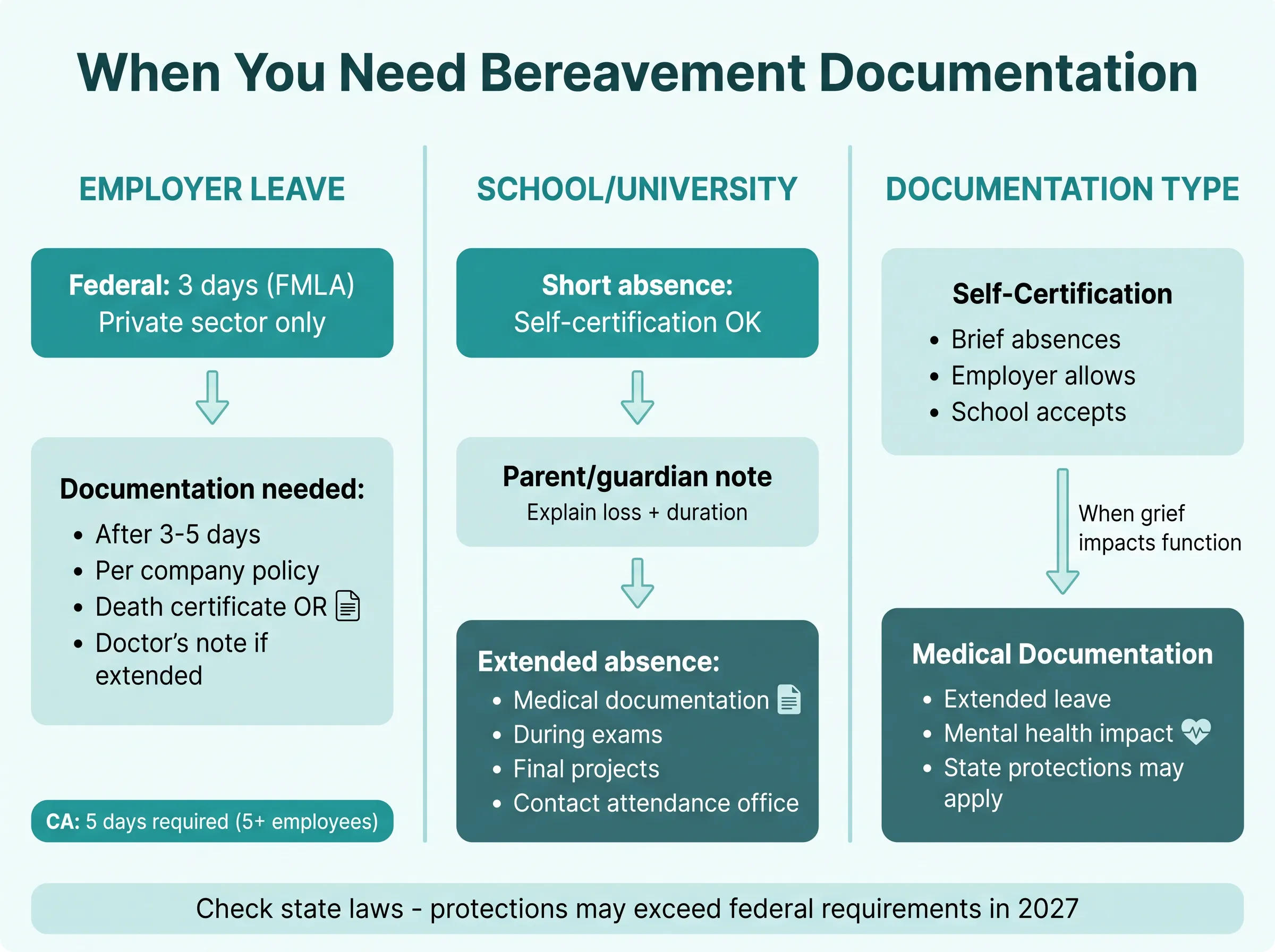
Federal law does not provide bereavement leave under the FMLA. The FMLA offers job-protected leave for specified family and medical reasons, and it covers grief only when it leads to a serious health condition. Many employers offer their own bereavement leave under company policy. Most employers require documentation after three consecutive days of absence. Your company’s policy determines when you need a doctor’s note for bereavement.
Some organizations accept a death certificate or obituary for short absences. Others require medical documentation if you extend your leave beyond the standard period.
School and University Documentation Policies
Some schools allow self-certification for short absences, but this varies widely. Many ask for documentation such as an obituary or death certificate, and a note from a parent or guardian may not be enough on its own. Universities may require medical documentation for extended periods, especially during exams or final projects.
Contact your school’s attendance office to understand their specific policy. Many institutions show flexibility during bereavement but need proper documentation to excuse missed work.
Self-Certification vs. Medical Documentation
Self-certification works for brief absences when your employer or school allows it.
Medical documentation becomes necessary when grief affects your ability to function. To see how the process works from start to finish, read about how GetMyDoctorNote works.
Mental health impact from grief is a valid reason for a doctor’s note for bereavement. State laws may offer protections beyond federal requirements. For example, California requires employers with five or more employees to provide up to five days of bereavement leave after the death of a family member, a rule effective January 1, 2023. Check workplace health and documentation resources to understand your rights and options.
For a deeper look, see doctor’s note for work.
Types of Medical Documentation for Bereavement
When you need a doctor’s note for bereavement, you have several options. The type of documentation you choose depends on your situation, timeline, and what your employer accepts.

Physician-Signed Medical Notes
Standard notes from your primary care physician remain the most widely accepted form of documentation. Your GP can write a note explaining that you need time off due to grief-related physical or mental health symptoms.
These notes typically include the dates you need to be absent, a brief statement about medical necessity, and your expected return-to-work date.
According to the Department of Commerce, employees must provide documentation supporting grief-related incapacity or evidence of attending a counseling session. Most employers accept these notes without question, making them your safest choice.
Mental Health Professional Documentation
Licensed therapists and counselors can provide documentation for bereavement in most states as of now.
Mental health documentation has gained broader acceptance among employers who recognize grief as a valid health concern.
These visits often cost less than traditional GP appointments and may have better insurance coverage. Many people find that seeing a grief counselor serves two purposes: getting the documentation they need and receiving emotional support during a difficult time.
Telehealth vs. In-Person Visits
Online medical services offer 24/7 access to physician-signed notes with phone verification. At Getmydoctornote, we provide fast access to licensed physicians who can evaluate your situation and provide proper documentation.
Telehealth appointments save time when you’re dealing with loss and need a doctor’s note for bereavement quickly. In-person visits may take several days to schedule, while online services can deliver notes within hours.
How to Request a Doctor’s Note During Bereavement
Getting a doctor’s note for bereavement starts with contacting your healthcare provider. The process is simpler than many people expect, and you don’t always need an in-person appointment.

Contacting Your Healthcare Provider
Call your GP office and explain you need documentation for a bereavement-related absence. Most providers understand these situations and can help quickly.
Many offer telephone consultations for bereavement documentation without requiring you to come in. This saves time when you’re dealing with loss and need to focus on family.
If your regular doctor isn’t available, urgent care centers can provide same-day documentation. Telehealth platforms also work well for this purpose.
The provider will ask about your situation and can write a note based on your mental health needs during this time.
What Information to Prepare
Before you call, gather a few details. You’ll need the dates of the loss and your required absence duration. Be ready to explain your relationship to the deceased.
Most providers don’t require a death certificate or obituary, but keep this information accessible if asked. Request specific language about mental health impact if you’re experiencing anxiety, depression, or acute stress.
Grief affects people differently, and your doctor can document how it’s affecting your ability to work or attend school. This makes your request for time off more clear to your employer.
Online Medical Note Services
Online services can provide physician-reviewed notes within hours. These platforms connect you with licensed doctors who understand bereavement leave documentation.
Employers can verify these notes via phone, making them a reliable option. At Getmydoctornote, licensed providers review each request to ensure proper documentation that meets employer requirements.
These services explain how the online documentation process works from start to finish. You complete a brief questionnaire about your situation, and a physician reviews it. The note arrives digitally, often within a few hours.
This speed helps when you need documentation quickly for work or school.
State-Specific Legal Requirements and Protections
Bereavement leave laws vary widely across the United States. Some states now require paid time off for grieving employees, while others leave the decision to individual employers.
Understanding your state’s rules helps you know what documentation you may need to provide.
California Bereavement Leave Law (2027 and 2027 Updates)
California requires employers with five or more employees to provide five days of bereavement leave. The law covers deaths of immediate family members, including spouses, children, parents, siblings, grandparents, and grandchildren.
In 2027, the state expanded coverage to include domestic partners and their immediate family members. Employees can take this leave within three months of the death.
A doctor’s note for bereavement may be required if you extend your absence beyond the standard five days. Employers cannot demand proof for the initial protected period.
Oregon and Illinois State Mandates
Oregon provides up to two weeks of bereavement leave for employees who have worked for their employer for at least 180 days. This leave applies when a family member dies, and you can use it for funeral arrangements, estate settlement, or grief processing.
According to the Illinois Family Bereavement Leave Act, employers must grant leave for pregnancy loss, miscarriage, stillbirth, failed adoption, or unsuccessful reproductive procedures. Illinois law recognizes that grief from these losses often requires medical support, making a doctor’s note for bereavement a standard part of the documentation process.
States Without Specific Bereavement Laws
Most states lack dedicated bereavement leave laws. In these locations, you rely on federal FMLA protections if you qualify. FMLA requires 1,250 hours of work in the past year and applies only to employers with 50 or more employees.
When your state has no specific law, your employer’s internal policy determines whether you need a doctor’s note for bereavement. Some companies prohibit requesting proof for absences under three days, while others require documentation from the first day.
What to Say to Your Employer or School
Contact your employer or school as soon as you can after the loss. Simple, direct communication works best. State the loss, your relationship to the deceased, and how long you expect to be absent. You might say: “I’m calling to let you know my father passed away yesterday.
I need to take bereavement leave starting today.”
You don’t need to share extensive personal details about the death. Employers and schools can’t legally require you to explain circumstances beyond the basic facts. Keep your message brief and professional.
Follow-Up Communication
Send a follow-up email to document your initial conversation. Request information about your organization’s bereavement policy in writing. This creates a paper trail if questions arise later. Your work sick-day guide often overlaps with bereavement procedures, so ask about both policies at once.
Keep all communication documented via email when possible. Save copies of every message you send and receive about your leave.
Requesting Extended Leave
For extended leave beyond standard bereavement days, tell your employer you will provide medical documentation. You might say: “I need additional time off and will obtain a doctor’s note for bereavement to support my request.”
This shows you understand the process and plan to follow proper procedures. A doctor’s note for bereavement validates your need for extra time when grief affects your ability to work or attend school.
Cost and Insurance Coverage for Bereavement Documentation
Getting a doctor’s note for bereavement comes with costs that vary based on where you seek help. HSA and FSA funds generally cannot be used for a doctor’s note for bereavement, because IRS rules limit them to medical care for diagnosis, treatment, or prevention of disease.
Traditional Healthcare Provider Costs
GP visits for bereavement documentation typically cost $50-250 without insurance. Urgent care centers charge similar rates but offer same-day appointments. These visits provide standard medical notes that employers accept widely.
Online Service Pricing
Online medical note services range from $15-100 with faster turnaround times. These platforms connect you with licensed physicians who review your situation and provide verified documentation.
The lower cost reflects the streamlined telehealth model, and many services deliver your doctor’s note for bereavement within hours.
Insurance Reimbursement Options
Some insurance plans cover telehealth mental health consultations with lower copays than standard office visits. Mental health professional visits often have better insurance coverage than GP visits for this purpose. A therapist visit might cost $20-75 with insurance, while an uninsured outpatient therapy session could cost $150-200.
Check your plan’s telehealth benefits before scheduling, and keep receipts for any out-of-pocket costs. Understanding how doctor’s notes work for school and work helps you choose the most cost-effective option for your situation.
Timeline: Getting Your Documentation Quickly
When you need a doctor’s note for bereavement, timing matters. The speed of getting documentation depends on which service you choose and when you need it.
Same-Day Options
Online medical services provide the fastest route to documentation. Most platforms deliver physician-signed notes within 2-4 hours. Telehealth services operate 24/7, including weekends and holidays, so you can request a note at any time. Urgent care centers also offer same-day documentation, though visits typically cost more than online options.
Standard Processing Times
Traditional GP appointments require more planning. You may wait 1-3 days for an available appointment slot, depending on your doctor’s schedule. After your visit, you’ll receive your doctor’s note for bereavement the same day. According to the Department of Labor, understanding your leave rights helps you plan how quickly you need documentation.
What to Do If You Need Immediate Documentation
Plan for at least 24 hours when possible, but same-day options exist for urgent situations. If your employer requires documentation before you return to work, contact an online service or urgent care center right away. These providers understand time-sensitive needs and can process requests quickly.
Common Mistakes to Avoid When Getting Bereavement Notes
Many people wait too long to request documentation, which creates problems.
Don’t wait until your employer threatens disciplinary action. Request a doctor’s note for bereavement proactively when you know you’ll need extended time off. This protects your job and reduces stress during an already difficult time.
Avoid sharing more medical information than necessary with your employer. They can’t ask for diagnosis details or personal health history. Your note should confirm medical necessity and absence dates, nothing more. According to federal guidance on sick leave for bereavement purposes, employees can use up to 13 days annually for family care and bereavement arrangements.
Key Considerations
Never fabricate or alter medical documentation. This can result in termination and legal consequences that follow you to future jobs. Employers verify authenticity through phone calls to medical offices and database checks.
Don’t assume you’re not eligible for leave. Check both federal and state laws before accepting your employer’s initial response. Some states offer protections beyond federal requirements.
Avoid accepting verbal approval only. Get bereavement leave approval in writing through email or a signed form. This documentation protects you if disputes arise later. Also, don’t use expired notes or templates found online. Employers spot these quickly and consider them fraudulent.
Supporting Your Mental Health During Bereavement
Grief affects your mental health in ways that can require professional support. While a doctor’s note for bereavement helps document your absence, the care you receive can also help you process your loss in healthy ways.
When Grief Requires Professional Help
Some warning signs show you need professional help. Watch for an inability to function in daily tasks, thoughts of self-harm, or depression that lasts for weeks without improvement. Grief counseling provides both emotional support and documentation if you need extended leave.
According to North Carolina Office of State Human Resources, employers often require documentation when you request bereavement leave for immediate family members.
Resources Beyond Medical Documentation
Employee Assistance Programs often provide free grief counseling sessions through your workplace. These sessions give you access to licensed professionals at no cost.
Support groups and bereavement organizations offer resources that don’t require a doctor’s note for bereavement. Many communities host free grief support meetings where you can connect with others who understand your experience.
Long-Term Support Options
Consider requesting FMLA intermittent leave if grief impacts your ability to work over time. This option lets you take time off as needed rather than all at once. You can attend therapy appointments or take mental health days when grief becomes too much to manage at work.
Conclusion
Grief affects everyone differently, and you deserve the time and space to process your loss without workplace pressure.
A doctor’s note for bereavement provides the documentation you need to protect your job while you heal.
Whether you choose your primary care provider, a mental health professional, or an online service, getting proper documentation is straightforward and affordable.
Know your rights under both federal and state law. Many states now offer protections beyond the basic FMLA provisions, and mental health documentation has become widely accepted across most employers and schools.
Don’t wait until you face disciplinary action to seek help. Request documentation early, communicate clearly with your employer, and keep all approvals in writing.
The most important step is giving yourself permission to grieve. Medical documentation simply formalizes what you already know: loss takes time to process, and your mental health matters.
If you need a doctor’s note for bereavement quickly, GetMyDoctorNote provides physician-signed documentation within hours, with 24/7 phone verification your employer can
Ready to start? Start your doctor’s note for bereavement and complete the online visit today.
trust.