


Your child wakes up with a fever, and you keep them home from daycare. Now you’re wondering: do I need a doctor’s note for daycare? Most parents face this question at some point, often unsure whether they’ll need to pay for an office visit just to get the required paperwork. Daycare facilities have different policies about when they require medical documentation and what information the note must contain. They also vary on which illnesses need clearance before your child can return.
This guide explains when your child needs a doctor’s note for daycare and what information providers must include. You’ll also learn how to obtain documentation without unnecessary expense. You’ll learn about telehealth options, illness-specific return guidelines, and what to do if your daycare questions the note you submit.
When Does Your Child Need a Doctor’s Note for Daycare?

Daycare facilities set their own documentation rules, but most follow similar patterns. Understanding when your child needs medical documentation helps you prepare before illness strikes.
State and Daycare-Specific Requirements
Most daycares require a doctor’s note for daycare after three or more consecutive days of illness-related absence. Some states mandate documentation after just 24 hours for certain contagious conditions. Your facility’s handbook outlines specific rules, which may be stricter than state minimums.
Policies vary widely between centers. Some require notes for any medical appointment during daycare hours, even routine checkups when your child wasn’t sick. Children with chronic conditions may need periodic medical updates even without acute illness episodes.
Common Illnesses That Trigger Documentation
Certain illnesses always require written clearance before your child can return, regardless of how long they were absent. Strep throat, conjunctivitis, hand-foot-mouth disease, and COVID-19 typically need documentation confirming your child is no longer contagious.
Fever-related absences often need documentation confirming your child has been fever-free for 24 hours without medication. This applies even if the fever lasted only one day, since getting documentation for illness-related absences protects both your child and other children in care.
How Long Absences Require Medical Clearance
The three-day threshold is common, but not universal. Some facilities require notes after two days, while others wait until five days have passed. Check your contract for the exact timeframe that applies to your center.
Information a Valid Daycare Medical Note Must Include
Required Medical Details and Provider Credentials
A valid doctor’s note for daycare must include your child’s full name and the date of the medical visit. It also needs the healthcare provider’s name with credentials. The provider must sign and date the note. Most facilities also require contact information, such as a phone number, so they can verify the note’s authenticity. Many daycares will call the provider’s office to confirm that the documentation is genuine.
Services like Getmydoctornote connect families with licensed clinicians who provide proper medical evaluations and documentation that includes all required provider details. Generic templates downloaded online typically get rejected because they lack specific medical evaluation details and verifiable provider information.
What the Note Can and Cannot Say
The note should list the dates your child missed daycare. It can also say that your child may return with no limits. You do not need a full diagnosis unless your daycare requires one. Many daycares want clear words, such as “no longer contagious” or “cleared to return.” Vague statements may not be accepted.
Understanding how documentation policies work at different facilities helps you request the right wording from your provider. The note cannot guarantee acceptance.
Your daycare or school attendance office makes the final decision about whether the documentation meets their specific requirements and how their verification process works. Even a properly formatted doctor’s note for daycare may be rejected if it doesn’t match what your facility’s attendance policy requires.
What a Doctor’s Visit for Daycare Documentation Covers
Telehealth Visits for Medical Documentation
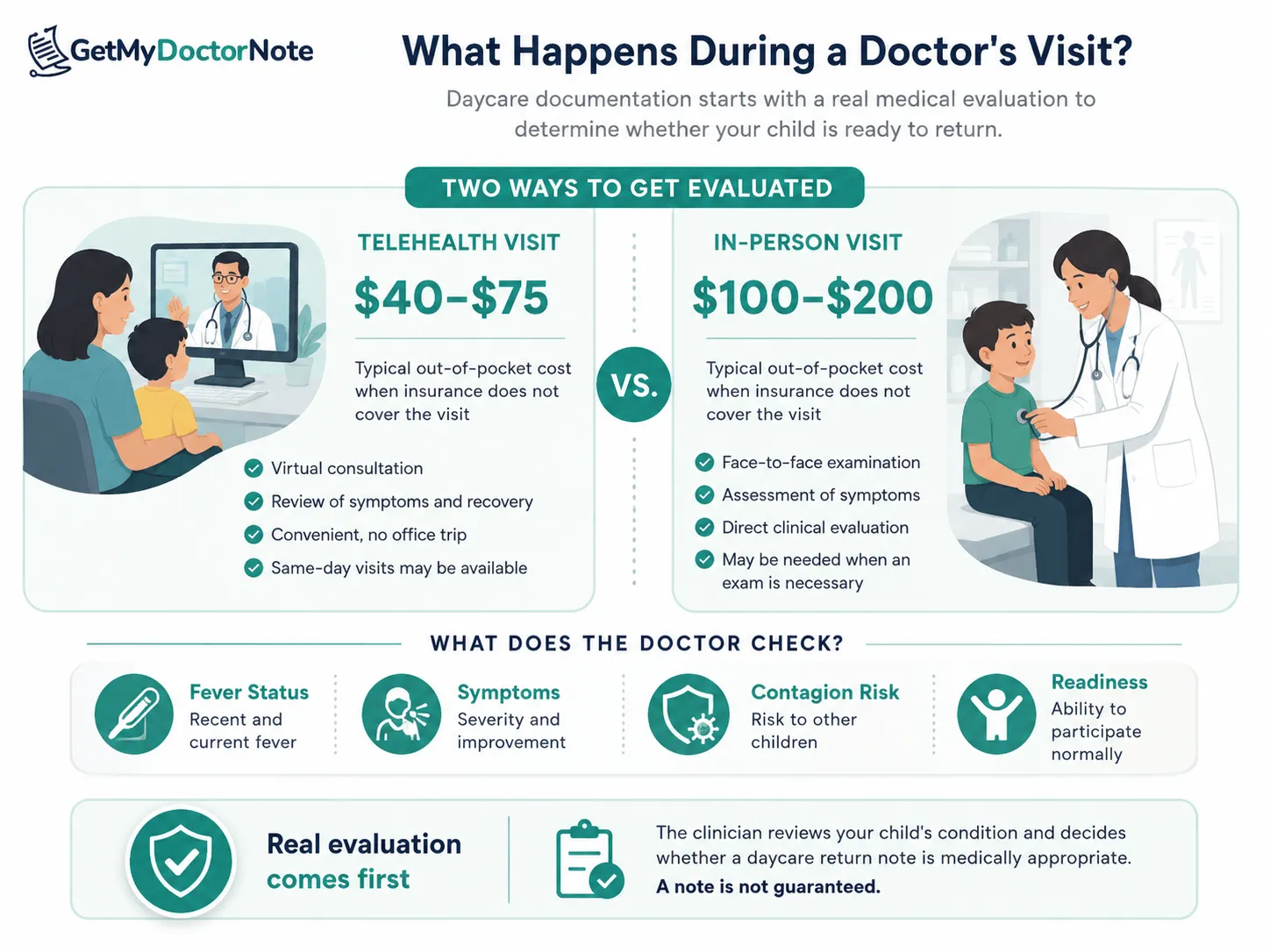
A telehealth visit for daycare documentation is a real clinician consultation, not a fake note or blank template download. Services like Getmydoctornote connect you with licensed providers who conduct actual medical evaluations. These virtual appointments follow the same clinical standards as in-person visits. The provider reviews your child’s symptoms, illness timeline, current condition, and recovery status to determine if return to daycare is medically appropriate.
When insurance doesn’t cover documentation-only appointments, virtual urgent care typically costs $40-75. An in-person sick visit costs $100-200 in the same situation. That makes telehealth a useful option for families who need a doctor’s note for daycare. You can skip the time and expense of an office visit. Many pediatric offices also offer phone calls with a nurse or provider for established patients recovering from simple illnesses.
What Happens During the Consultation
The clinician assesses whether your child meets return-to-care criteria based on fever status, symptom severity, contagion risk, and ability to participate in activities. For conditions like strep throat requiring antibiotic treatment documentation, the provider verifies treatment duration before clearing your child to return. This process protects other children at your facility while confirming your child is ready to resume normal activities.
Many visits are completed the same day, though this does not mean instant approval of every request. The provider must determine medical appropriateness before issuing a doctor’s note for daycare. Understanding documentation requirements for school and childcare settings helps you prepare the information your provider needs during the consultation.
Common Illnesses When Kids Can Return to Daycare
Illness-Specific Return Guidelines and Note Requirements
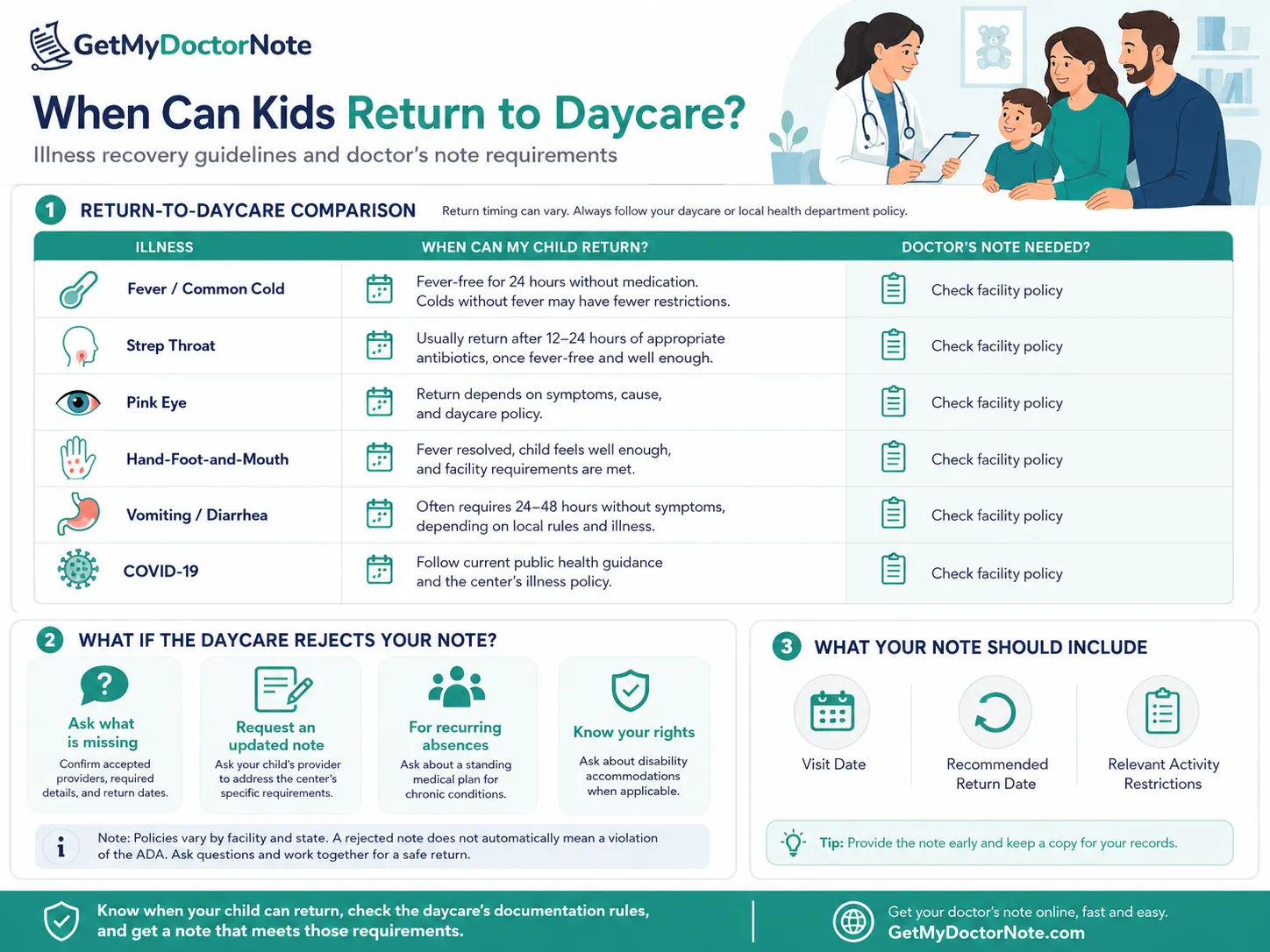
Each illness has different return-to-daycare rules based on contagion risk and recovery time. According to the Pennsylvania Department of Health, children with fever must be fever-free for 24 hours without medication before returning. A doctor’s note for daycare is usually required if the absence exceeded two days.
Strep throat requires antibiotic treatment for 24 hours before your child can return. A note confirming treatment is always required. Conjunctivitis needs 24 hours of antibiotic drops for bacterial cases, while viral cases may return when discharge stops. Most facilities require documentation for pink eye.
Hand-foot-mouth disease allows return when fever is gone, and your child can participate comfortably. Blisters don’t need to be completely healed. Note requirements vary by facility. Stomach bugs require children to be symptom-free for 24 to 48 hours. The CDC guidance on sick students recommends documentation if absence was three or more days or if norovirus or rotavirus is suspected.
COVID-19 policies follow current CDC guidelines, which change as the virus evolves. A doctor’s note for daycare confirming the end of isolation is almost always required. Common colds without fever usually don’t need documentation unless absence exceeds your facility’s policy threshold, typically three or more days. 24-hour fever-free readmission rules goes into more depth on this.
Your Employer or School Still Decides Whether to Accept the Note
Understanding Acceptance Policies
No medical provider can guarantee your daycare will accept a doctor’s note for daycare. Attendance offices set their own rules about what documentation they require. Some daycares only accept notes from pediatricians or established providers, not urgent care or telehealth services they don’t recognize.
Regulated facilities must follow childcare health and safety requirements set by state licensing agencies. Individual centers often add stricter policies on top of these baseline rules. If your daycare contract and state regulations conflict with a facility policy, you may have grounds to negotiate, especially if policies create financial hardship.
What to Do If Your Note Gets Rejected
For chronic conditions that cause frequent absences, ask your child’s specialist for a standing medical plan letter. This letter covers multiple absences, so you won’t need a new note each time. It also saves you repeated appointments and documentation fees. If a policy unfairly penalizes children with chronic health conditions, it may violate ADA protections.
Talk with your pediatrician about changes that would help your child. A doctor’s note that lists your child’s ongoing medical needs can back up your request for flexible attendance rules at daycare. If the daycare turns down the note, ask the director what kind of provider or paperwork they accept. Then go back to your healthcare provider and ask for an updated note that meets those needs.
Need more detail on doctor’s excuse include, Ask your provider for a dated note that lists the visit date, the return-to-daycare date, and any activity limits.
Start Getting a Doctor’s Note for Your Child
Steps to Request Documentation
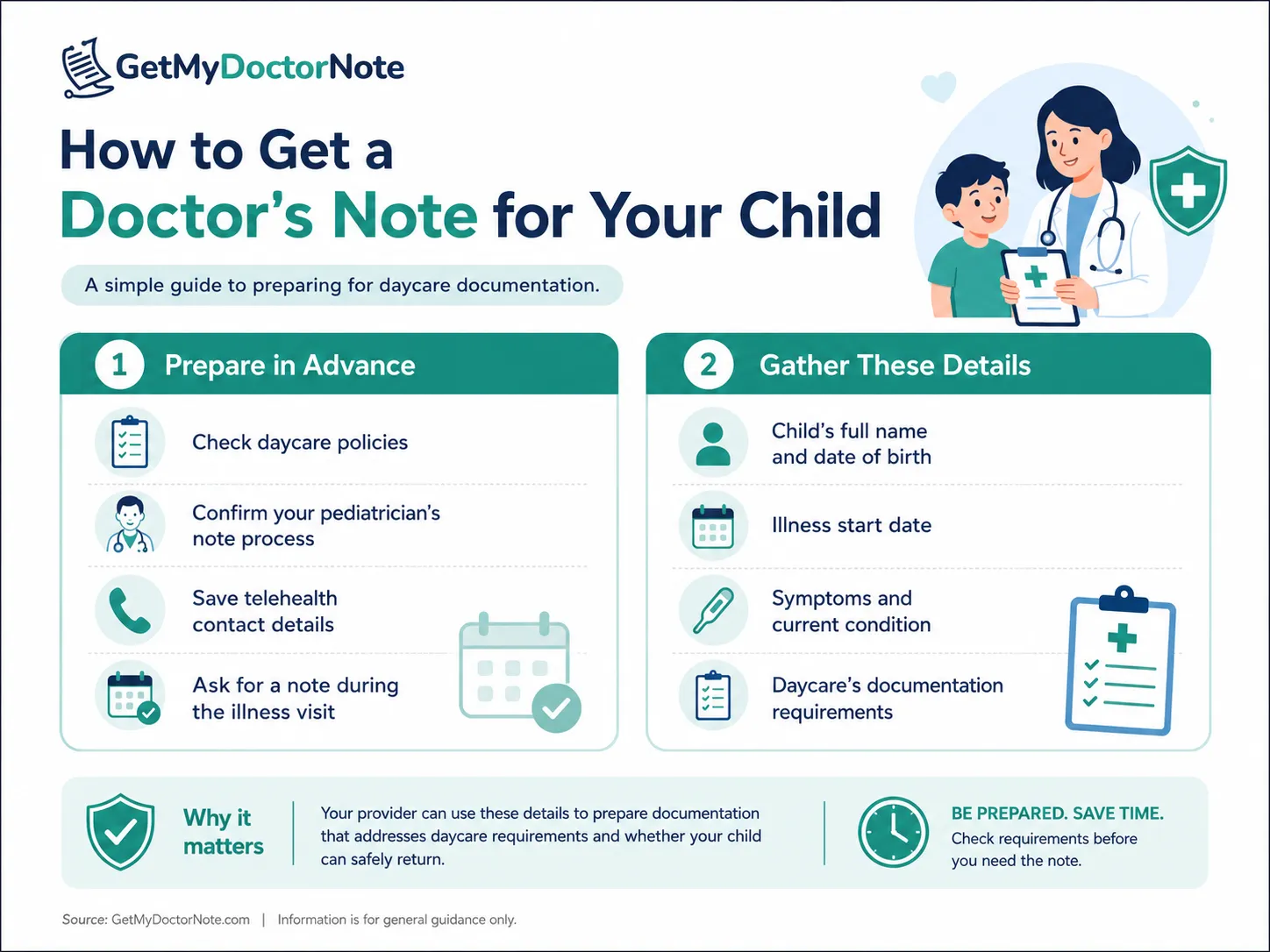
Review your daycare’s specific documentation policies before your child gets sick. Knowing what they require saves time when you need a doctor’s note for daycare quickly. Call your pediatrician’s office and confirm their process for issuing return-to-care notes. Some provide them free for established patients who were seen during the acute illness phase.
Save telehealth contact info so you’re ready when you need paperwork fast. Some employers offer telehealth through their benefits programs for free or a small copay, and these visits can provide school notes. When your child sees a doctor for an illness, ask for notes right away, even if daycare hasn’t asked yet. That way, you won’t need a second visit just for paperwork.
What Information to Have Ready
When requesting a note, gather your child’s full name and date of birth, illness start date, and symptoms experienced. Include your child’s current status and your daycare’s specific requirements. Childcare facilities follow state infectious disease guidelines that determine what documentation they need.
Having this information ready speeds up the process whether you visit in person or use telehealth. Your provider needs these details to write a doctor’s note for daycare that meets facility requirements and confirms your child can safely return.
Conclusion
Getting a doctor’s note for daycare doesn’t have to derail your week or drain your wallet. The process becomes straightforward once you understand your facility’s specific requirements and know where to turn for documentation. Most situations need a simple return-to-care note confirming your child is no longer contagious and can participate in activities, not a detailed medical diagnosis.
Before your child gets sick again, take 15 minutes to read your daycare’s written documentation policy. Then ask your pediatrician’s office how they handle return-to-care notes for established patients. Also ask whether they charge for documentation-only requests. Save the contact info for at least one telehealth service that offers medical notes, so you have a backup when you need paperwork fast.
If you need a doctor’s note for daycare and can’t get in for an in-person visit, Getmydoctornote can help. It connects you with licensed clinicians who can check your child’s condition and provide the right return-to-care paperwork, often the same day.