


A doctor’s note for daycare is needed when your child’s sickness matches the center’s rules to return. Your doctor’s note for daycare must answer everything the facility asks to see. Most daycare centers require a doctor’s note for daycare if a child has a fever over 100.4°F, a catchy sickness like strep throat or pink eye, or stays home three days or more. The steps can feel hard when you are handling job tasks and a sick child at home. Rules that ask for official notes before your child can come back add extra stress.
This guide tells when daycare facilities can ask for medical notes and what facts a good note must show. It also shows how to get one using regular visits or online tools and what comes next after you hand it in. You will learn your rights as a parent, how to get cheap notes fast, and how daycare checks them.
When There is a Need for a Doctor’s Note for Childcare

Childcare facilities ask for medical documentation when specific illness patterns suggest a child may pose health risks to other children. Understanding these triggers helps you prepare for when your child needs professional evaluation.
Common Illness Triggers for Documentation
Most childcare centers ask for paperwork when a child has a fever above 100.4°F that lasts 24 hours or more. This cutoff helps staff spot kids who need a doctor’s check, not just rest at home. Contagious illnesses almost always need a doctor’s okay before kids can come back.
Examples include strep throat, pink eye, hand-foot-mouth disease, and stomach bugs. Take a child with suspected strep, for instance. Before returning to group care, they’ll need a doctor’s note for strep throat confirming treatment. It must show that treatment has begun.
State Regulations vs. Facility Policies
State licensing regulations set minimum health standards for childcare facilities. Individual centers can impose stricter policies beyond these legal requirements. Most states distinguish between policy preferences and legally mandated documentation requirements.
Centers cannot require a doctor’s note for childcare for illnesses not covered by state health codes. You can request written copies of facility health policies and compare them against state licensing standards.
For additional health documentation guidance, reviewing current regulations helps you understand your rights.
Return-to-Care Timeframes
Return-to-care timeframes vary by condition and facility policy. Most centers require 24-hour fever-free periods without medication before a child returns. Antibiotic treatment usually requires 24 hours of completion before return. Some conditions need full symptom resolution.
Documentation must confirm the child is no longer contagious and safe to return to group care settings. The doctor’s note for childcare should specify when the child can safely resume attendance based on medical assessment of contagion risk.
What People Ask for When They Request This Note
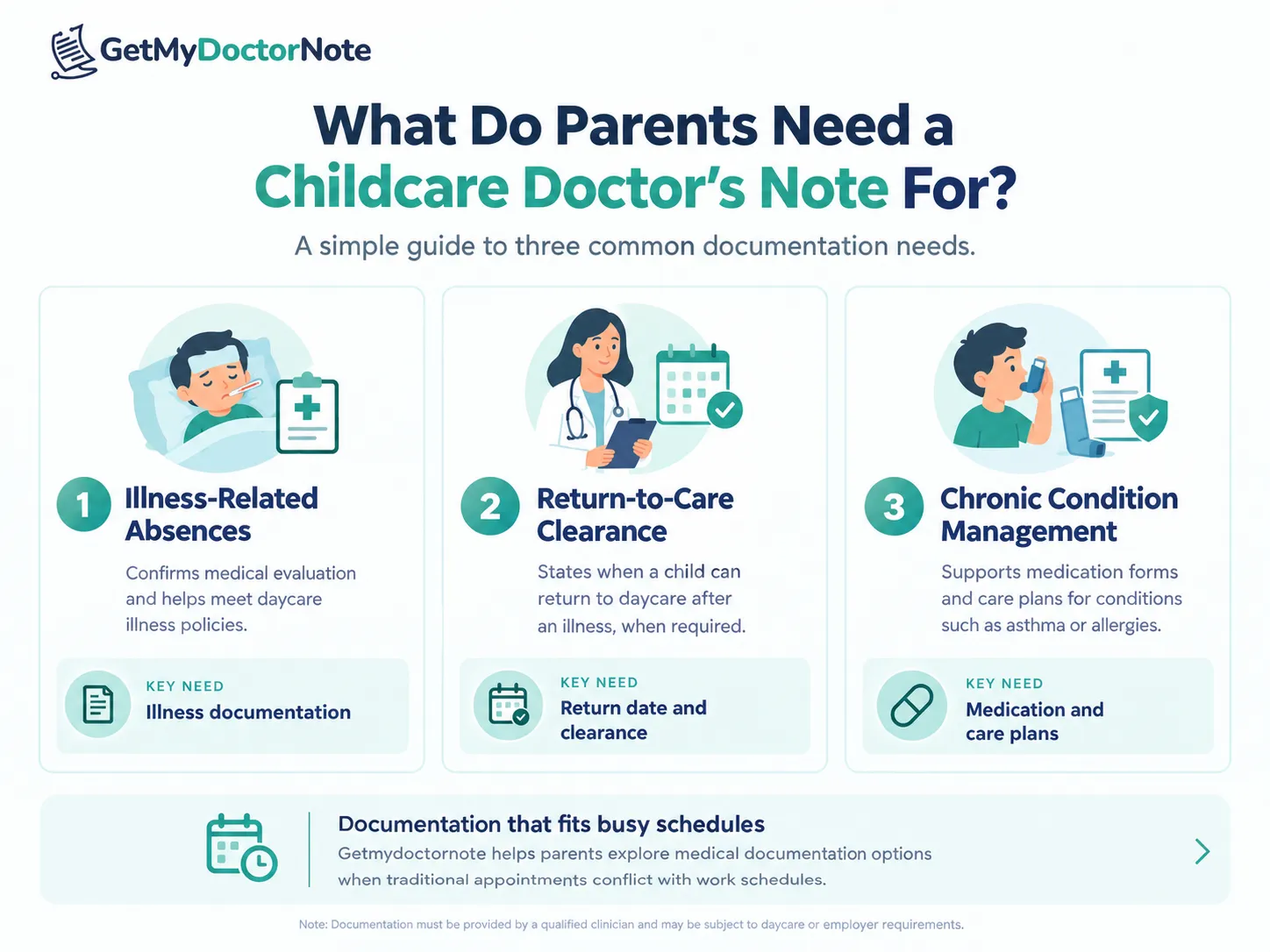
Documentation for Illness-Related Absences
Parents request notes to comply with childcare facility policies that require medical clearance after specific illnesses or symptom durations. Childcare centers need confirmation that a child has received appropriate medical evaluation and is no longer a health risk to other children.
Understanding how the online medical documentation process works helps parents prepare symptom information before their visit.
Return-to-Care Clearance
If your employer offers backup childcare or dependent care help, you may need paperwork to use it. Many of these programs pay for childcare only when a doctor’s note shows your child was sick. A childcare doctor’s note confirms that a doctor checked the child. It also states when the child can return to daycare. This meets daycare rules and employer benefit standards.
Chronic Condition Management
Families with children who have long-term health issues like asthma or allergies may need doctor notes to get medicine at daycare. Emergency contact papers and health plans often need a doctor’s signature for kids with special health needs. Parents who cannot visit a children’s doctor easily look for fast ways to get papers that meet daycare rules without missing work.
At Getmydoctornote, many parents use our service to get medical notes when normal doctor visits conflict with their work hours.
What the Medical Visit Covers in Childcare
Symptom Assessment and Medical History
The doctor checks your child’s current symptoms, how long the sickness lasted, temperature numbers, and any home care you already tried. This conversation helps show how bad the sickness is and if it needs medical care.
Medical history questions cover recent sick contacts, vaccine history, known allergies, and health issues that could slow down recovery. When in-person visits are not open, many parents finish this check through online video visits using GetMyDoctorNote.
Clinical Evaluation Process
While federal well-child screening services focus on preventive care, illness visits target specific symptoms to determine contagion risk. The visit shows whether symptoms mean a catching illness that needs special medicine or a normal sickness that clears up with home rest.
Doctors give clear advice on when the child can safely go back to daycare based on how germs spread and symptom improvement. This check protects other kids in group care centers from getting sick from infectious germs.
Treatment Recommendations
Care plans may include ideas for store-bought medicine, prescription drugs when needed, or basic home care steps. The doctor explains which warning signs to watch for and when to get more medical help.
The visit creates written health records of the sickness and a expert opinion on if the child is well enough to go back to group care. This daycare doctor’s note proves that the child got a good checkup and meets return rules. The paper helps parents follow center rules while getting their child the medical care they need.
What the Note Can and Cannot Say About Doctor’s Note for Childcare
Required Information for Valid Documentation
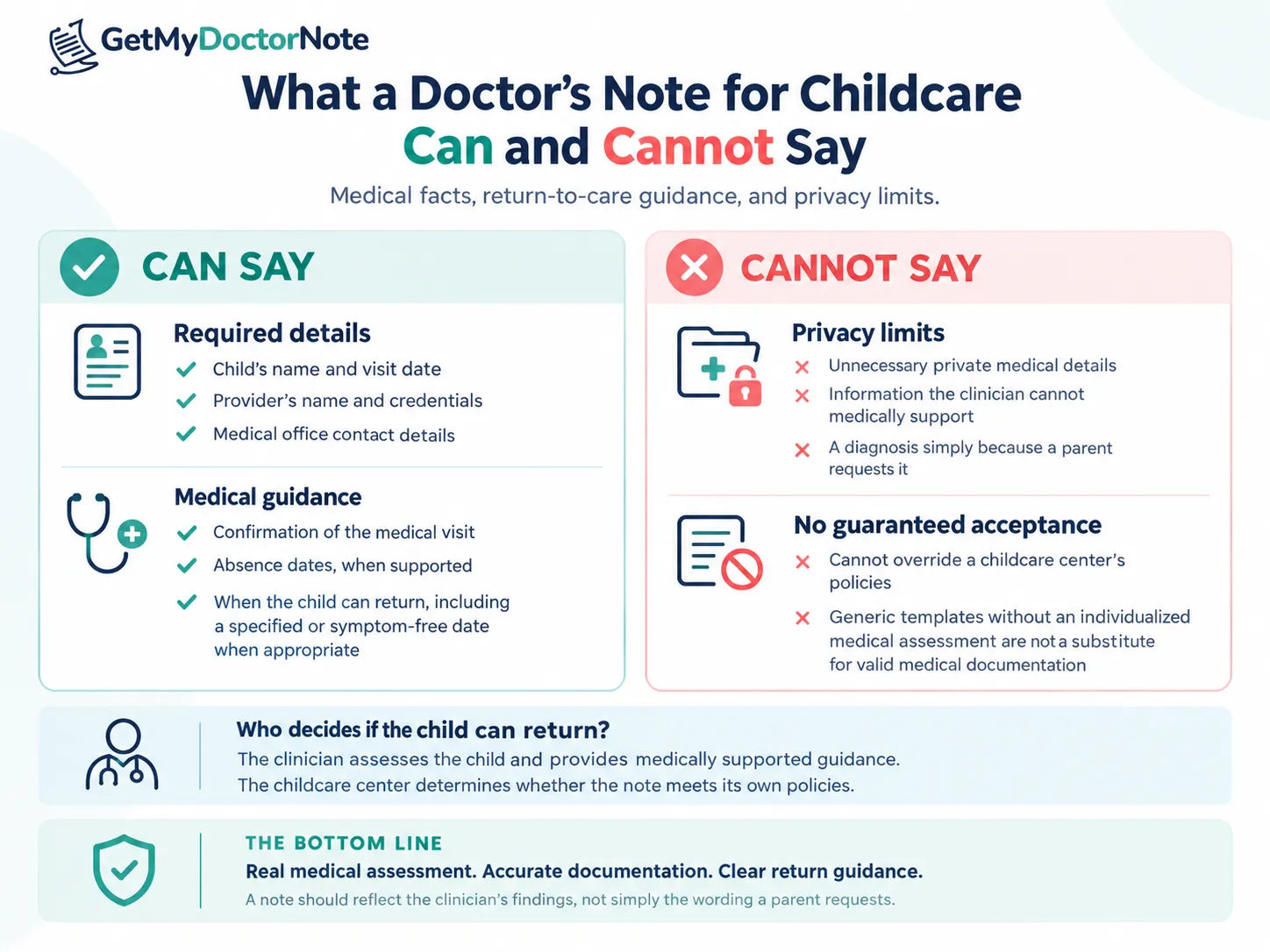
A valid doctor’s note for childcare needs a few details. It should include the child’s name and the date of the visit. It should also list the provider’s name and credentials. Staff also need the medical office’s contact information so they can check the note. Without these details, most childcare centers will turn it away. The note should confirm the child saw a doctor for an illness. It should also say when the child can go back. That return date can be a specific day or a symptom-free date.
Medical Privacy Limitations
Clinicians include only the diagnosis details that childcare rules require. Privacy laws protect the rest of the medical information. The note lists only what the clinician can medically support, such as dates of absence and when your child can return. It does not say what the parent wants it to say. The same rule applies to adults who need a doctor’s note for work absence verification. Medical privacy also limits what employers can ask for.
Return-to-Care Guidance
Notes cannot guarantee that every childcare facility will accept the documentation. Individual centers set their own verification standards for childcare from a licensed provider carries medical authority, but the facility decides whether it meets their specific policy requirements.
Generic templates without individualized medical assessment do not constitute valid medical documentation. Most facilities will reject these immediately. The clinician must conduct an actual evaluation to determine when your child can safely return to group care settings.
Your Employer or School Still Decides Acceptance

Submitting a doctor’s note for childcare doesn’t guarantee your facility will accept it. Each center maintains its own verification standards and acceptance policies, even when documentation comes from licensed medical professionals.
Facility Verification Standards
Childcare centers can verify medical documentation by contacting the listed provider within 24 to 48 hours of submission.
They check that the phone number goes to a real medical office. They also confirm that the clinician saw your child. Online doctor’s notes from licensed providers are legally equivalent to notes from in-person visits. Each center, however, sets its own acceptance policy. Some accept telehealth notes without question. Others require traditional office visits.
When Documentation Gets Rejected
Facilities can turn down notes for three reasons. The note may not state a clear return-to-care clearance. The contact details may not work for verification. Or the note may not meet the facility’s own policy. A note that only says “evaluated for illness” with no return date often gets turned down. Centers can’t legally require documentation for illnesses that state health codes don’t cover. But they can set stricter rules as a condition of enrollment.
Your Rights and Appeal Options
Parents can ask for written copies of a facility’s health policies. If a policy goes beyond legal authority, they can file a complaint with the state licensing agency. If the center rejects documentation, ask for the specific reasons in writing. Then discuss other options with the center director before scheduling more medical visits. You can also check documentation requirements for various childcare situations to see what different facilities usually need.
How to Start Getting Your Doctor’s Note
Online Documentation Services
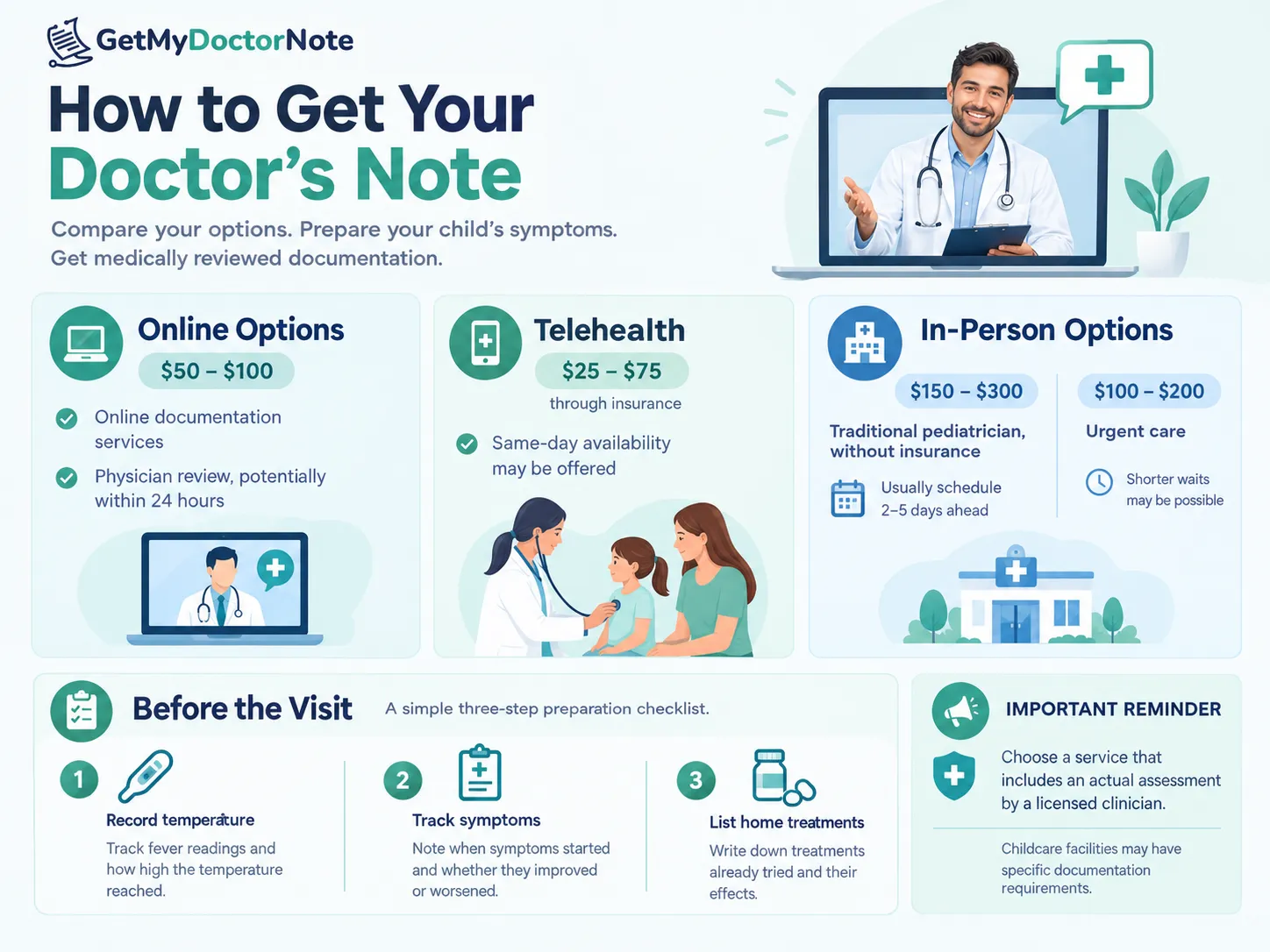
Online doctor’s note services provide physician-reviewed documentation for $50-$100 within 24 hours through symptom assessment and medical evaluation. You complete a health questionnaire describing your child’s symptoms, and a licensed clinician reviews the information before issuing documentation. All legitimate documentation services require actual medical assessment by licensed professionals. Avoid services offering blank templates or guaranteed acceptance, as childcare facilities verify medical documentation and reject generic forms.
Traditional and Telehealth Options
Telehealth consultations through your insurance provider cost $25-$75 and offer same-day availability with licensed pediatric clinicians. Before scheduling, review telehealth service agreements and consent requirements to understand the process. Traditional pediatrician appointments cost $150-$300 without insurance. They require scheduling 2-5 days in advance but provide continuity of care with doctors who know your child’s medical history. Urgent care visits range from $100-$200 with shorter wait times but less familiarity with your child’s medical history.
What to Prepare Before Your Visit
Before any visit, document your child’s symptoms with temperature logs, symptom duration, and any treatments already tried at home. Write down when symptoms started, how high fevers reached, and whether symptoms improved or worsened with home care. This preparation helps clinicians make faster assessments and provide accurate return-to-care guidance that meets childcare facility requirements.
Conclusion
Getting a doctor’s note for childcare comes down to three things: knowing your facility’s actual requirements and choosing a documentation method that fits your schedule. You also need to understand what medical providers can legally confirm. You don’t need to scramble for same-day appointments or pay hundreds of dollars. Online and telehealth options provide the same valid documentation at lower costs.
Start by asking your childcare center for its written health policies today. Find out which illnesses need a doctor’s clearance and what the note has to include. That way, when your child gets sick, you’ll know just what paperwork you need and where to get it. You won’t have to miss work or stretch your budget.
Getmydoctornote connects you with licensed clinicians who can do medical evaluations and write documentation that meets childcare standards. You can book your visit online and get your note within 24 hours. That’s an easy option when your child needs clearance to head back to care.